Free PCB Sunday: Pick your PCB

BP-600x373

We go through a lot of prototype PCBs, and end up with lots of extras that we’ll never use. Every Sunday we give away a few PCBs from one of our past or future projects, or a related prototype. Our PCBs are made through Seeed Studio’s Fusion board service. This week two random commenters will get a coupon code for the free PCB drawer tomorrow morning. Pick your own PCB. You get unlimited free PCBs now – finish one and we’ll send you another! Don’t forget there’s free PCBs three times every week:

Continue reading “Free PCB Sunday: Pick your PCB”

App note: USB Type-C, CC Pin Design Considerations

an_on_AN-5086-D

Application note from ON Semiconductor on USB Type-C connector supporting non-USB standard charging protocol, Link here (PDF)

When designing hardware systems with Type−C connectors, a designer also has to consider all legacy, standard, and non-standard specifications that exist in the USB connector eco system. With the introduction of the Type−C connector and the Configuration channel (CC Pin) new challenges occur trying to ensure overall system robustness. This note addresses some of the concerns with the CC pin in a robust system environment.

App note: PCB routing methodology for SuperSpeed USB 3.1 switch family from ON Semiconductor

an_on_AN-6103-D

Routing USB 3.1 traces app note from ON Semiconductor. Link here (PDF)

The introduction of USB Type−C has provided a significant launch opportunity for USB3.1 data rates across an array of platforms from portable to desktop and beyond. This proliferation of Type−C will certainly create challenges due to the high speed nature of the interface. High Speed USB2.0 presented enough of a system design challenge for tiny mobile device OEM’s trying to pass USB eye compliance. A 10X or even 20X increase in data rates will propagate that challenge far beyond the issues that were raised with HS. PCB traces in these systems must be treated as sensitive transmission lines where low-loss impedance control is king. Every effort must be made to make these paths as ideal as possible to prevent signal loss and unwanted emissions that could infect other systems in the device.

Free PCB coupon via Facebook to 2 random commenters

irtoyv3-600x369

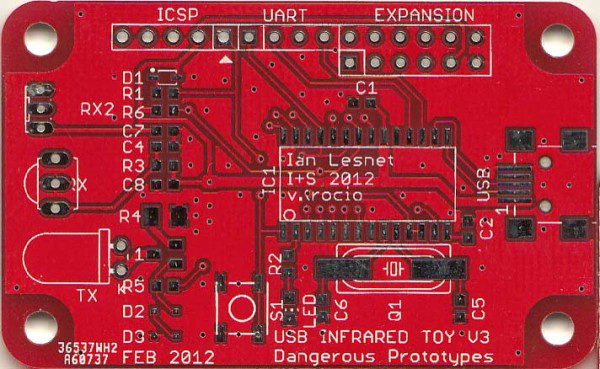
Every Friday we give away some extra PCBs via Facebook. This post was announced on Facebook, and on Monday we’ll send coupon codes to two random commenters. The coupon code usually go to Facebook ‘Other’ Messages Folder . More PCBs via Twitter on Tuesday and the blog every Sunday. Don’t forget there’s free PCBs three times every week:

Continue reading “Free PCB coupon via Facebook to 2 random commenters”

Homemade 6 GHz FMCW radar

pfinished

Henrik Forstén has a nice build log on his newest version of this homemade 6 GHz FMCW radar:

Frequency Modulated Continuous Wave (FMCW) radar works by transmitting a chirp which frequency changes linearly with time. This chirp is then radiated with the antenna, reflected from the target and is received by the receiving antenna. On the reception side the received signal that was delayed and undelayed copy of the transmitted chirp are mixed (multiplied) together. The output of the mixer are two sine waves that have frequencies of sum and difference of the waveforms. The frequencies of the received signals are almost the same and the sum waveform has frequency of about two times of the original signal and is filtered out, but the difference waveform has frequency in kHz to few MHz range. The difference frequency is dependent on the delay of the received reflection signal making it possible to determine the delay of the reflected signal. The electromagnetic waves travel at speed of light which allows converting the delay to distance accurately. When there are several targets the output signal is sum of different frequencies and the distances to the targets can be recovered efficiently with Fourier transform.

See the full post on his blog. Project files are available at github.

How to build your own RS232 to TTL converter

pix4

A how-to on making a DIY RS232 to TTL converter by Jestine Yong:

As I read many pages on the internet I saw there is a sort of adapter so called “USB to TTL adapter” who can communicate through with the uC. I had not the time to order one but I give a try to make one for the COM port. Actually it is an RS232 to TTL converter which I found better from my opinion than that USB to TTL adapter.
Here is why I like more this RS232 to TTL adapter than the other one:

  • can be used on a real RS232 port
  • it is a stable voltage level converter
  • can be used on USB port too (through USB to RS232 converter)
  • there is no VCC ( somebody would say it’s a disadvantage but wait…) *
  • it is a real hardware stuff, no emulation etc. (if it is used through a real com port)
  • can be built really cheap and easy

More details at Electronics Repair site.

TS100 oscilloscope hack

dscf4042-600

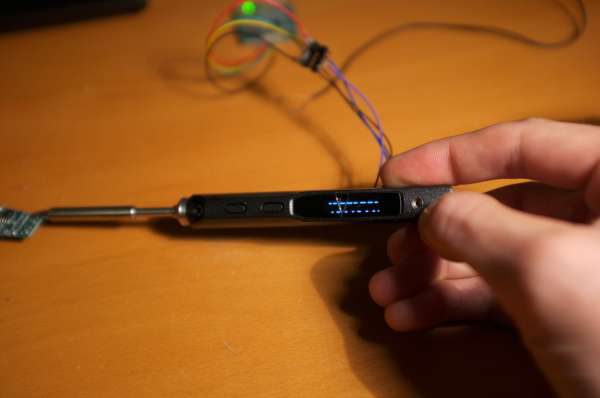
Befinitiv wrote an article describing his modification to turn a TS100 soldering iron into an oscilloscope:

As you can see in the video, you can use the soldering tip as your measurement probe. Coincidentally, a soldering iron has already a pretty good form factor for an oscilloscope. Here is a still picture of a UART waveform

See the full post on his blog.

Check out the video after the break.
Continue reading “TS100 oscilloscope hack”

#FreePCB via Twitter to 2 random RTs

BP

Every Tuesday we give away two coupons for the free PCB drawer via Twitter. This post was announced on Twitter, and in 24 hours we’ll send coupon codes to two random retweeters. Don’t forget there’s free PCBs three times a every week:

  • Hate Twitter and Facebook? Free PCB Sunday is the classic PCB giveaway. Catch it every Sunday, right here on the blog
  • Tweet-a-PCB Tuesday. Follow us and get boards in 144 characters or less
  • Facebook PCB Friday. Free PCBs will be your friend for the weekend

Some stuff:

  • Yes, we’ll mail it anywhere in the world!
  • Check out how we mail PCBs worldwide video.
  • We’ll contact you via Twitter with a coupon code for the PCB drawer.
  • Limit one PCB per address per month please.
  • Like everything else on this site, PCBs are offered without warranty.

We try to stagger free PCB posts so every time zone has a chance to participate, but the best way to see it first is to subscribe to the RSS feed, follow us on Twitter, or like us on Facebook.

DirtyPCBs.com China export brokerage pay your vendors get your stuffs

1export-dirtypcbs


Exporting small low value orders from China is a challenge to do cost effectively, however proper export of bulk stuff is comparatively simple. After hearing what hardware people are going through to get stuff from China we had to offer a better way. A Dirty Way.

Having trouble paying a Chinese supplier? Did things start off ok for small orders, but you’re facing dodgy payment options when you scale to volume? Let’s take a look at why this happens, and how we can help ease your China payment and export problems!

CNY is a controlled currency

Chinese Yuan (CNY, RMB, kuai) is a controlled currency: the government has strict rules for how and why it can be exchanged for other currencies.

You can’t send a wire to China in local CNY currency because there’s simply no way for your bank to exchange the money for you. The Chinese government doesn’t sell CNY on an open market like US dollars or Euros.

Your Chinese supplier can’t just convert foreign currency to CNY either. The bank will call to notify them of the wire, then they go to the bank in person to show their export license, a goods invoice, proof of tax payment, and proof of export declaration. If this verification isn’t completed in a few days the wire is returned to you less fees (~$50).

Mom and pop shops that give amazing China prices rarely have an export license, and often have no idea how to receive foreign currency legally. Foreign “China Guys” who spend some time in Shenzhen and now peddle services to hacker/Makers have even less of a clue!

How to pay a supplier in China

There are three legal routes to get money into China for CNY transactions:

  • Payment for goods: Requires invoice, VAT tax receipt proof (fapiao), export declaration proof, import/export permit, banking permit, etc. A portion of VAT may be refundable in the following month if all documents are in order
  • Payment for services: Requires invoice. 6% tax charged on incoming payments. If this method is abused to pay for goods without an export declaration the supplier cannot deduct the cost of the goods from their income leading to very high taxes (25% + loss) in addition to the 6% services tax
  • Payment to individuals: Chinese residents may exchange $50,000 USD equivalent of foreign currency per year for personal use. Abusing this method to pay for goods carries the risk of high personal income taxes on the recipient at the end of the year

While the process of exporting goods isn’t too difficult, most of the permits require months long applications and deposits of serious amounts of capital. It just isn’t worth it for a lot of small/medium Chinese manufacturers and suppliers to deal with foreign customers directly (which is why there’s so many agents on Alibaba!)

Things people (who should know better) do:

  • Smuggle backpacks of cash across the border from Hong Kong (not unsafe, surprisingly, but still illegal)
  • Smuggle components in their pants (cargo shorts are not a logistics network…)
  • Hire elderly Chinese to bring in $50,000USD through their personal allotment without fully understanding the tax consequences
  • Black market exchange banks: warehouses with pallets of cash are busted daily in Guangdong Province

Even people with a decade of experience working with China still do some of these really stupid things to avoid using an export broker.
China has come a long way in the last decade: don’t believe that famous hacker with pants full of chips, these things are not tolerated as they were in the past. At the same time, there really hasn’t been an alternative for open hardware hackers: brokerage firms want a high percent fee and pricing is rarely transparent. Often a brokerage isn’t even willing to handle less than a shipping container in size. We’re trying to change that!

Who needs export brokerage
Does this describe you?

  • Have a Chinese supplier lined up and ready
  • Need to make an order > $500
  • Supplier can’t receive large amounts of foreign currency, has no/crappy shipping options
  • You don’t want to go to China personally and pull money from ATM machines

Don’t mess around; we’ll use our Chinese company and licenses to handle the export on behalf of your supplier.

A better way: Big Company export brokerage for dirty prices!

  1. Give us the details of your already arranged purchase, we’ll get back with freight options (you can ask for a full refund of this service if you’re unhappy with our freight options!)
  2. We create official invoices and arrange shipping between you, your supplier, and us
  3. Wire payment for goods, tax (VAT), and freight in foreign currency to our Chinese company or Hong Kong company
  4. We convert the currency to CNY and make payment to your supplier
  5. Your supplier ships to our warehouse with an official VAT tax receipt (fapiao) attached
  6. We export to you with an official export declaration via air freight or sea freight
  7. Depending on the tariff category, we can apply for a refund of all or part of the VAT paid

That’s it! We have all the permits and experience necessary to handle currency exchange and proper export procedures.
Sit back and wait for your stuffs to arrive without anything dodgy messing up your supply chain! Your backers applaud you for a project delivered on time and without drama!

A few notes

Export is a new feature at DirtyPCBs that we’d like to automate further. We’re looking for a few people to help test this service with schedules that allow for our lawyers and accountants review everything at each step. If you’d like our help exporting from China please get in touch!

Building a 12V 110Ah battery bank using 80 32650 LiFePO4 cells

B8-600

Kerry Wong built a DIY battery bank using eighty 32650 LiFePO4 cells:

During the past couple of weeks I have been busy making a large battery bank using the eighty 32650 LiFePO4 cells I bought on eBay. The battery bank I am building is a 12V (13.2V nominal) 4S/20P one. With each cell rated at 5.5Ah the battery bank has a capacity of 110Ah, which is just under 1.5kWh.
While These cells are marked as 32700 they are technically still 32650 cells according to the datasheet, which is a little bit confusing. Since I am making a custom battery bank the actual cell dimension is not as critical.

See the full post on his blog.

Check out the video after the break.

Continue reading “Building a 12V 110Ah battery bank using 80 32650 LiFePO4 cells”

Free PCB Sunday: Pick your PCB

BP-600x373

We go through a lot of prototype PCBs, and end up with lots of extras that we’ll never use. Every Sunday we give away a few PCBs from one of our past or future projects, or a related prototype. Our PCBs are made through Seeed Studio’s Fusion board service. This week two random commenters will get a coupon code for the free PCB drawer tomorrow morning. Pick your own PCB. You get unlimited free PCBs now – finish one and we’ll send you another! Don’t forget there’s free PCBs three times every week:

Continue reading “Free PCB Sunday: Pick your PCB”

App note: How to measure the power consumption of a peripheral

an_nxp_an5402

Application note from NXP Semiconductors on MCU peripheral power consumption measurement. Link here (PDF)

This Application Note outlines the steps to measure the power consumption of a peripheral and figure out some key points in the measurement. The document takes low-power timer (LPTMR) and LPUART as examples to introduce the method to measure the power consumption of peripheral. The test code is developed in IAR and FRDM-KE15Z board.

App note: TEA1938T GreenChip SMPS control IC

an_nxp_an11923

TEA1938T SMPS control IC application note from NXP Semiconductors. Link here (PDF)

The TEA1938T is a high-featured low-cost DCM and QR mode flyback converter controller. It provides high efficiency at all power levels and very low no-load power consumption at nominal output voltage in burst mode operation.

To minimize ripple, the burst mode uses a small hysteresis scheme. The TEA1938T is designed to support multiple-output-voltage applications like USB PD (Type C) power supplies. Typical applications include notebooks and tablet adapters, fast charging, and direct charging adapters.

Teardown and repair of an Agilent E3632A DC power supply

pE3632A-e1505951806733-600

Teardown and repair of an Agilent E3632A DC power supply from The Signal Path:

In this episode Shahriar & Rosanah investigate an Agilent power supply which does not appear to power on. It can be quickly observed that the fuse has failed on the unit. Using an isolation transformer a small amount of AC voltage is applied to the unit after the fuse replacement. It is clear that a short is present somewhere in the instrument since even at 10V AC the instrument consumes more than 1A.

See the full post at thesignalpath.com.

Check out the video after the break. Continue reading “Teardown and repair of an Agilent E3632A DC power supply”

Free PCB coupon via Facebook to 2 random commenters

irtoyv3-600x369

Every Friday we give away some extra PCBs via Facebook. This post was announced on Facebook, and on Monday we’ll send coupon codes to two random commenters. The coupon code usually go to Facebook ‘Other’ Messages Folder . More PCBs via Twitter on Tuesday and the blog every Sunday. Don’t forget there’s free PCBs three times every week:

Continue reading “Free PCB coupon via Facebook to 2 random commenters”

Build your own testing/programming jig

testrig_all-1080x675-600

Sjaak has published a new build:

Inspired by an old article from sparkfun and some tests I conducted myself I came up with a PCB that holds the pogopinholders and an lasercut acrylic fixture for the PCB on top. Using the dirt(y)cheap services from dirtypcbs.com the cost for this jig, including pogopins and their holders is about 45 USD. As an advantage you receive 5 lasercut acrylic and 10 PCBS which allows you to make 3-4 jigs in total!
To design the PCB that holds the pogopins I started with a 10×10 PCB with M3 mounting holes and imported the to be programmed PCB (File, Import, Eagle drawing) and place this in the centre (not mandatory, but looks prettier).

See the full post at smdprutser.nl.

DirtyPCBs adds full range of steel and framed stencils

1Stencil


Stencils for solder paste and red glue are now available in a bunch of standard sizes for solder paste/red glue dispensers. You can choose from all the options offered by our favorite stencil maker:

  • Purposes: Solder paste for surface mount component reflow process. Red glue for two-sided or through hole board wave soldering process
  • Alignment: quarter points for automated dispensers, and through hole for hand application
  • Polishing process: hand sanded (for most stuff) or electrolytic (for BGA footprints)
  • Engineering options: your paste layer (untouched), auto (China standard), auto with approval by PDF

We’ve been playing with the Neoden4 pick and place machine in a mini production line and needed a better way to order stencils with advanced options. Give us a shout if we missed any options you need!

DirtyPCBs site update with encrypted https connections

1dirtypcbs


DirtyPCBs.com now supports secure, encrypted access with https://DirtyPCBs.com. We used a free certificate from Let’s Encrypt and the process was almost painless. You’ll need to add the ‘s’ to the address manually to access the secure version of the site.

Https may become the default eventually. It’s trendy to force everyone onto https these days, but China targets https traffic for slowdowns and blocking. The Shenzhen office has a much better experience using the non-encrypted http version so we’ll keep it around.

WiFi TFT touch LCD weather station with ESP8266

lcd-weatherstation-with-esp8266

Erich Styger built this ESP8266 WiFi weather station with touch LCD and wrote a post on his blog detailing its assembly:

After the “WiFi OLED Mini Weather Station with ESP8266“, here is another one: this time with Touch LCD :-)  In the previous article (“WiFi OLED Mini Weather Station with ESP8266“) I have used the OLED kit from blog.squix.org. And as promised, this time it is about the “ESP8266 WiFi Color Display Kit”

Project info at MCU on Eclipse. Code is available on GitHub.

Free PCB Sunday: Pick your PCB

BP-600x373

We go through a lot of prototype PCBs, and end up with lots of extras that we’ll never use. Every Sunday we give away a few PCBs from one of our past or future projects, or a related prototype. Our PCBs are made through Seeed Studio’s Fusion board service. This week two random commenters will get a coupon code for the free PCB drawer tomorrow morning. Pick your own PCB. You get unlimited free PCBs now – finish one and we’ll send you another! Don’t forget there’s free PCBs three times every week:

Continue reading “Free PCB Sunday: Pick your PCB”