Here is an article describing how to reduce noise and voltage overshoot in buck topology DC/DC converters. Slowing down the turn on time of the high side switch in conjunction with replacing a diode with a low side switch should increase efficiency and lower the power dissipation.
Adding snubers (RC circuit) in parallel to the low side switch should help decrease overshoot, and lower noise. As always, the best thing to lower the noise is to carefully layout the PCB. High currents and switching operation can add loads of noise if the leads carrying that current are long, so keep them as short as possible.
Miceuz discovered a plasma TV by the dumpster and used the BASIC interpreter on the Bus Pirate to play with some of the components cannibalized from inside. Above he shows the BP connected to a 6-LED indicator with a M62320FP chip and an I/O port expander for I2C.
You can find more pictures and miceuz’s BASIC code at wemakethings.net.
Want to try your hand at hardware hacking? You can make it easier with a Bus Pirate for about $30.
Jetlag, still on New York time. Finished the video just in time, then slept in till noon. Desperately trying to followup with all the awesome new friends from New York.
Next week we’ll officially announce the schedule for the Global Geek Tour: India (why not?) edition. We’re already meeting up with a half-dozen forum regulars and readers for a tour of Bangalore. Can you join us too?
Today we finished the 3D model of a 7(9) segment VFD tube as true to life as we were able. The rendering above is of a single tube, expect the full 6 tube, 3 board project 3D model on Monday.
Little Bird Electronics donated a Au$100 gift voucher for the best Australian entry to the Open 7400 Competition. It is limited to a participant in Australia only.
Forum regular Bearmos gave us a tour of his workshop and shows off several DIY tools. Check out the pictures below the fold.
A thrown together workbench (in use for ~ 6 years now. originally built using an upturned recycling bin as a saw horse). I need to cut a hole in the back of the shelf so I can fit an old analog scope up there.
Every Friday we give away some extra PCBs via Facebook. This post was announced on Facebook, and on Monday we’ll send coupon codes to two random commenters. More PCBs via Twitter on Tuesday and the blog every Sunday.
Don’t forget there’s free PCBs three times every week:
Free PCB Sunday. The classic. Every week, get free PCBs right here on the blog comments
Tweet-a-PCB Tuesday. Follow us and get boards in 144 characters or less
Facebook PCB Friday. Free PCBs while you wait for the weekend
After we interviewed Cameron from Suspect Devices at Maker Faire, our friend Chris from Rocket Brand Studios cornered us for a recursive interview. The video is crowd sourced and we collected as much footage from bystanders as possible.
A very short version of this unique event was included in “The New York Trip” video, but here’s the full, uncut story. If we recover any further footage from the ‘sync incident’ we’ll release an updated video with the new perspectives.
A HUGE thanks to Don and Cameron from Suspect Devices, Thomas, and of course Chris over at Rocket Brand Studios.
New York Global Geek Tour 2012 is presented in the video above. We follow our fearless leader as he finds his place in the Big Apple. There’s food, toys, and geeks aplenty.
The tour starts with the East Village food crawl. Watch a merry band of hackers battle good food and drinks. We hit Oh! Taisho for some meat on sticks, followed by Japadog for some Japanese hot dogs. Then Sake and interviews at Decibel Sake bar. Unfortunately the rest is but a blur.
The next morning we awake with a headache and a vague sense of shame, and head over to the Open Hardware Summit. Ian gave the “Open source and USB: A Sketchy History” presentation, but the real fun happens at the after-party. Bonus question: why is Bunnie dancing behind Windel?
Friday is an empty hole between OHS on Thursday, and the Maker Faire on Saturday. We plowed it under with an electronics tour New York. We came in force, 22 people crammed into Hack Manhattan’s tiny space.
Next up we invaded Radio Shack on assignment for كازينو على الإنترنت في عُمان, grabbing headers and LEDs for a small kiosk sensor rig. We went in expecting mobile phones and video cables, but we were pleasantly surprised that they actually have some electronics and kits on hand. There were Seeed Studio parts, Arduino kits, and even drawers with actual electronics parts. An improvement from last year, but we were still unable to get all the parts for a Joule Thief PCB that Hack Manhattan gave us.
We fast tracked to the MakerBot store to check out some live 3D printing bots. 3D prints, 3D printers, and spools of ABS plastic were all around us.
In dire need of a recharge, we stopped for some soup dumplings and beer in China Town. By this point there were still 18 of us, so we occupied a huge table and had a relaxing meal.
269 Electronics is a small shop located in the back of a tourist trap in China town. They had the standard resistors, capacitors, and the like. They even did some repair in the back.
After that, we jumped on New York’s filthy subway and went to Leeds Radio in Queens. Are we alone in thinking New York has the most disgusting Subway in the world? Give us Tokyo, Hong Kong, London, or Madrid any day. Anyway – after toiling through that creaking, lurching, stinking tube we were greeted by closed doors. Leeds had shut down earlier in the day due do a sudden zombie attack. The uninfected survivors headed to the Maker Faire to setup and enjoy the after party.
The World Maker Faire occupies Saturday and Sunday. This year we gave away more business cards than every. Probably because people were attracted to the nixie tube display like moths to a flame. We did a few interviews with old friends and people who stopped by the table.
We started off with less than fond memories of New York from last year, but this trip was a hoot! A huge thanks to everyone who make it possible! We’ve been editing continuously since we landed. Now it’s time for sleep, but expect your personal thankyous and followups tomorrow.
*If we had infinite time there’d be music and tighter editing, but instead it’s done now! All swearing is simulated. It’s just a joke! All apologies to Anthony Bourdain.
Today is the day we released our massive Global Geek Tour of New York Video. We’ve been working at it since the plane touched down, pulling all-nighters to get it to you as soon as possible.
The VFD project continues, with work concentrating today on the driver board. WE assembled the schematic, and routing is under way.
We’re also in the process of an accurate 3D model of the VFD tube. The image above is just a preliminary model of the glass tube.
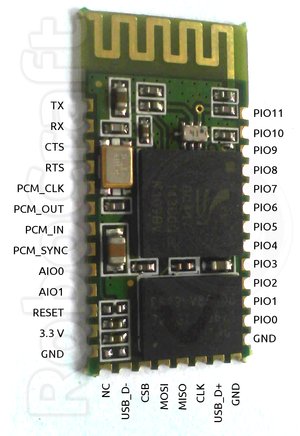
Paul Sokolovsky developed a proof-of-concept open source firmware for common Bluetooth modules based on the CSR BlueCore4 cheapset.
“BlueCore4-Ext is a popular Bluetooth chip used in many Bluetooth modules, some priced below $10. The idea is to create Wireless Sensor/Control Network using these modules, as Bluetooth is really ubiquitous technology nowadays, so any smartphone can be used to provide user UI/control for such network.”
Read more on this project and find code links on Paul’s blog.
This backpack allows you to drive our 60mm RGB LED Matrix using just a single I2C bus. Not only does this save you the rats nest of wiring required to directly drive a matrix, this backpack has an internal driver that handles all of the multiplexing operations.
Hoarding…Yup. Nice to know that I’m not alone in my insanity. Here’s “My collection”. To be fair, there are some VFDs and Dekatrons in there as well. I’ve salvaged most of my nixies (side view in the plastic flip box, end view in the neighboring cardboard box) from old equipment that I’ve acquired from swap meets, which can be a lot cheaper than resorting to eBay.
Share your collection with us in the comments, or via the contact form.
Alex designed this soldering iron tip holder. It’s an aluminum bar bended into shape, with holes for the tips drilled into it. As basic as it is, it’s both functional, and good looking.
After everything was said and done, it took about an hour to get it made and on my desk. Not bad for solving my problem perfectly to the tune of $7!
Brad Antoniewicz has been exploring USB webkeys, the dongle devices used as marketing tools which guide Windows users to a seller’s webpage when plugged into the USB port. Essentially, webkeys function as a USB HID, emulate a keyboard and send commands stored in EEPROM to the host PC. Brad explored his webkey’s EEPROM using the Bus Pirate to discover the pinout and reprogram the memory.
Back in the 80s when very few TVs had remotes, let alone automatic shutdown timer, Victor decided to build exactly that for his grandfathers TV. After a set interval an LED turns on indicating that the timer has expired, if a button isn’t pressed within a few seconds the TV is turned off.
My grandfather was known to fall asleep about 5 minutes into watching any program on TV in the evening. Then, the TV would go on all night long. Those TVs in the eighties consumed a lot of power, so one day I decided to make a small device that would automatically switch off the TV when he falls asleep.