Traktorino, an open source DIY MIDI controller

Traktorino

Here’s an Arduino based open source MIDI controller by Musico Nerd, the Traktorino:

The Traktorino is a powerful low-cost DIY MIDI Controller. It is based in the Arduino platform and it comes in DIY kit, or assembled. In its core, there’s a shield that connects to an Arduino Uno, which uses open-source code, making it totally hackable.
The Traktorino is a MIDI class compliant device, designed for controlling Traktor. It has several features and custom made mappings, so you can take the most of the software. However, it can do much more than that. The Traktorino can control any software that accepts MIDI, like Ableton Live, Serato, FL Studio, Logic, etc

More info at musiconerd.com and on GitHub.

Check out the video after the break. Continue reading “Traktorino, an open source DIY MIDI controller”

#FreePCB via Twitter to 2 random RTs

IRToy-600x369

Every Tuesday we give away two coupons for the free PCB drawer via Twitter. This post was announced on Twitter, and in 24 hours we’ll send coupon codes to two random retweeters. Don’t forget there’s free PCBs three times a every week:

  • Hate Twitter and Facebook? Free PCB Sunday is the classic PCB giveaway. Catch it every Sunday, right here on the blog
  • Tweet-a-PCB Tuesday. Follow us and get boards in 144 characters or less
  • Facebook PCB Friday. Free PCBs will be your friend for the weekend

Some stuff:

  • Yes, we’ll mail it anywhere in the world!
  • Check out how we mail PCBs worldwide video.
  • We’ll contact you via Twitter with a coupon code for the PCB drawer.
  • Limit one PCB per address per month please.
  • Like everything else on this site, PCBs are offered without warranty.

We try to stagger free PCB posts so every time zone has a chance to participate, but the best way to see it first is to subscribe to the RSS feed, follow us on Twitter, or like us on Facebook.

Taito C-Chip: data by lobotomy

p-IMG_20170709_133450-600

CAPS0ff writes:

In a previous post we described some early attempts to analyze the Taito C-Chip. See Haze’s forum post for some background on the C-Chip itself.
In particular we’re interested in the EPROM. Previous efforts focused on less invasive techniques with the goal of keeping the C-Chip alive after dumping. Unfortunately, we’ve been unable to successfully send an unlock command and efforts to rebond the EPROM die have been difficult with the equipment we have on hand.
With this in mind, we took a break to regroup. If we remove the ASIC we can solder to PCB traces shared with the EPROM. Traces are documented in our wiring diagram

More details on his blog here.

App note: Performance of noise canceller of LC823450

an_on_AND9722-D

Audio Noise cancelling LC823450 from ON Semiconductor. Link here (PDF)

This application note describes the performance of Noise Canceller of LC823450 Series. The customer can improve of audio characteristics by using this canceller. Its function can be used for various products such as Wireless headset, Earbads, Wireless speaker or IC−recoder.

Free PCB Sunday: Pick your PCB

BP-600x373

We go through a lot of prototype PCBs, and end up with lots of extras that we’ll never use. Every Sunday we give away a few PCBs from one of our past or future projects, or a related prototype. Our PCBs are made through Seeed Studio’s Fusion board service. This week two random commenters will get a coupon code for the free PCB drawer tomorrow morning. Pick your own PCB. You get unlimited free PCBs now – finish one and we’ll send you another! Don’t forget there’s free PCBs three times every week:

Continue reading “Free PCB Sunday: Pick your PCB”

App note: Performance of echo canceller of LC823450

an_on_AND9721-D

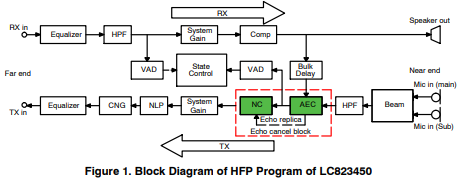
Audio application echo canceller LC823450 from ON Semiconductor. Link here (PDF)

This application note describes the performance of Echo canceller of LC823450 Series. The customer can improve the sound quality of hands free communication by using this canceller. Its function can be used for various products such as Wireless headset. Earbads or other voice communication products.

‘Daytime Running Light’ module (DRL) with ATtiny85

montaj_test2

Nicu Florica writes:

A reader of my sites and blogs, Mr. Liviu Hinoveanu wanted to replace classical DRL module made with 555 with Attiny85 programmed in Arduino style.
He send me the schematic and PCB designed with Livewire and PCB Wisard software
After I undertand what module must work, I write DRL_ATtiny85.ino sketch.
Mr. Hinoveanu made module and upload sketch in ATiny85 like in article from Programarea unui microcontroler ATTiny85 cu sketch Arduino.

See the full post on his blog, Arduinotehniq.

Check out the video after the break. Continue reading “‘Daytime Running Light’ module (DRL) with ATtiny85”

Free PCB coupon via Facebook to 2 random commenters

BP

Every Friday we give away some extra PCBs via Facebook. This post was announced on Facebook, and on Monday we’ll send coupon codes to two random commenters. The coupon code usually go to Facebook ‘Other’ Messages Folder . More PCBs via Twitter on Tuesday and the blog every Sunday. Don’t forget there’s free PCBs three times every week:

Continue reading “Free PCB coupon via Facebook to 2 random commenters”

DEC PDP 11 / 24 CPU CARD: State of the art design from 1979

p-high_res_all-600

DEC PDP 11/24 CPU card teardown from Electronupdate:

This is a cpu card from a class of computers known as mini-computers.
By the late 1970’s DEC was about to be eclipsed by the microcomputer. At the same time this card was in production the 68000 and 8086 16-bit class micro processors were also in the market: their superior cost would soon take much of DEC’s low end market.
The card uses their FONZ-11 LSI chip set. Most interestingly the CPU instructions are micro-coded and placed into separate chips: the instruction set could be expanded at will by adding more “303E”s. Typically this would be for a floating-point instruction set.

More details at Electronupdate blog.

Check out the video after the break. Continue reading “DEC PDP 11 / 24 CPU CARD: State of the art design from 1979”

Automatic fan controller for server racks

38933511880_7a892b8310_z

Dilshan Jayakody published a new build:

In this post we describe fan controller which we designed for our 9U wall mount server cabinet. This fan controller is designed to drive a 12V DC cooler fan with pre-configured intervals or by monitoring the temperature of the server cabinet.
Core components of this fan controller is CD4060 binary counter, LM35 temperature sensor and LM358 operational amplifier. In this design CD4060 is used as long duration timer and it can configured to trigger cooler fan from 1-minute and up to 4-hour.

See the full post on his blog here.

Negative impedance converters

p-NIC

An article discusses the negative resistance and negative impedance converter from Analog Zoo:

“Negative resistance” may seem like a purely academic concept, but can be easily realized in practice with a handful of common components. By adding a single resistor to a standard non-inverting op amp circuit, we can create a negative impedance converter, which has applications in load cancellation, oscillator circuits, and more.

More details at Analogzoo.com.

Check out the video after the break. Continue reading “Negative impedance converters”

Why electrolytic capacitors are actually kinda shitty

thumb332x187-1

Afroman writes, “Electrolytic capacitors are common, but knowledge of their limitations is uncommon. A demonstration is shown highlighting the difference in performance between electrolytic and ceramic capacitors in power supplies. Other topics discussed in the video: Electrolytic capacitor construction, ceramic capacitors, ESR, ESL, impedance curves, why “0.1uF”, and more.”

Via Afrotechmods.

Check out the video after the break. Continue reading “Why electrolytic capacitors are actually kinda shitty”

Alexa (Echo) with ESP32 and ESP8266 – Voice controlled relay

p-esp8266-esp32-alexa-circuit-600

Rui Santos writes, “In this project, you’re going to learn how to control the ESP8266 or the ESP32 with voice commands using Alexa (Amazon Echo Dot). As an example, we’ll control two 12V lamps connected to a relay module. We’ll also add two 433 MHz RF wall panel switches to physically control the lamps.”

More info at randomnerdtutorials.com.

Check out the video after the break. Continue reading “Alexa (Echo) with ESP32 and ESP8266 – Voice controlled relay”

Reading a VGA monitor’s configuration data with I2C and a PocketBeagle

pocketbeagle-vga-600

Ken Shirriff wrote an article showing how to read the monitor’s config data using the I2C protocol and a board with an I2C port:

Have you ever wondered how your computer knows all the characteristics of your monitor— the supported resolutions, the model, and even the serial number? Most monitors use a system called DDC to communicate this information to the computer.1 This information is transmitted using the I2C communication protocol—a protocol also popular for connecting hobbyist devices. In this post, I look inside a VGA monitor cable, use a tiny PocketBeagle (a single-board computer in the BeagleBone family) to read the I2C data from an LCD monitor, and then analyze this data.

More details at Ken Shirriff’s blog.

#FreePCB via Twitter to 2 random RTs

IRToy-600x369

Every Tuesday we give away two coupons for the free PCB drawer via Twitter. This post was announced on Twitter, and in 24 hours we’ll send coupon codes to two random retweeters. Don’t forget there’s free PCBs three times a every week:

  • Hate Twitter and Facebook? Free PCB Sunday is the classic PCB giveaway. Catch it every Sunday, right here on the blog
  • Tweet-a-PCB Tuesday. Follow us and get boards in 144 characters or less
  • Facebook PCB Friday. Free PCBs will be your friend for the weekend

Some stuff:

  • Yes, we’ll mail it anywhere in the world!
  • Check out how we mail PCBs worldwide video.
  • We’ll contact you via Twitter with a coupon code for the PCB drawer.
  • Limit one PCB per address per month please.
  • Like everything else on this site, PCBs are offered without warranty.

We try to stagger free PCB posts so every time zone has a chance to participate, but the best way to see it first is to subscribe to the RSS feed, follow us on Twitter, or like us on Facebook.

Curiosity Mars Rover

p-Front-cropped-600

The Curiosity Mars Rover project from Beatty Robotics:

We are excited to share our latest and most ambitious robot, the Curiosity Mars Rover. This is a highly-interactive, 1/10th scale functional replica of the NASA Curiosity Mars Rover. This project was ambitious for us in two main ways: First, we worked very hard to make the robot visually accurate to the original NASA rover. This necessitated custom designing and manufacturing nearly every visible component on the robot. One of the key challenges was to get the required level of detail and functionality into such a small scale robot. Second, we encapsulated all the features and capabilities we wanted for this robot into a robust, maintainable, and modular electronics package based on a stack of custom Printed Circuit Boards (PCB) that we designed. This post focuses on the external view of the robot while future posts will focus on the electronics and functionality.

More details at Beatty Robotics blog.

STM32F103 vs GD32F103 round 3: UART

p-gd32_uart-1080x675-600

Here’s the part 3 of Sjaak’s post comparing the GD32 to the STM32:

Since the GD32F103 can run as fast as 108MHz but has not a proper USB clock divider to provide a 48MHz clock for USB communication we need another way to communicate with the outside world. Since the early days of computing the easiest way to go is a asynchronous serial interface using the UART peripheral. I can try to explain how this protocol works, but here is a better write-up.

If you missed part 1 and part 2, be sure to check it out.

More info at smdprutser.nl.

Free PCB Sunday: Pick your PCB

BP-600x373

We go through a lot of prototype PCBs, and end up with lots of extras that we’ll never use. Every Sunday we give away a few PCBs from one of our past or future projects, or a related prototype. Our PCBs are made through Seeed Studio’s Fusion board service. This week two random commenters will get a coupon code for the free PCB drawer tomorrow morning. Pick your own PCB. You get unlimited free PCBs now – finish one and we’ll send you another! Don’t forget there’s free PCBs three times every week:

Continue reading “Free PCB Sunday: Pick your PCB”

App note: Enable pin operation and functions of eFuses

an_on_AND9175-D

Get to know a number of useful usage of the enable pin of ON Semiconductor’s eFuse. Link here (PDF)

ON Semiconductor electronic fuses (eFuses) are analog integrated circuits that are used to protect circuits operating from 3.3, 5, or 12 V DC supplies. They have numerous protection functionalities such as overvoltage clamping, current limiting, thermal shutdown, and a controlled output voltage slew rate. They are available in thermal latching or thermal auto-retry configurations.

A key feature of the eFuse family is the enable pin. This application note describes the features of the enable pin and provides guidance to ensure its proper use. The enable pin of any eFuse may be left floating if the application does not require that it be controlled and does not require thermal fault notification.