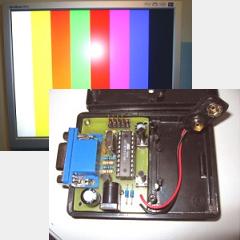
Setup a GPS receiver with the Bus Pirate

Krishna writes with a followup to his previous post, Using Bus Pirate to interface a MT3318 GPS receiver:

…the idea is to change the settings of the GPS module so that we need not modify Bus Pirate settings each time we connect it to the PC.

NMEA stands for National Marine Electronics Association. When you swap your GPS receiver for another module then your existing MCU can be retained as it is with little or no modifications.This is due to the NMEA standard followed by all the GPS chip manufacturers.

Get your own handy Bus Pirate for $30, including world-wide shipping. Also available from our friendly distributors Adafruit, Open Source Control Systems, and eHaJo.

Via the contact form. Thanks Krishna!

27C3: Chip and Pin is broken


Smart cards have gradually replaced magnetic strip cards for point-of-sale and ATM transactions in many countries. Customers authorize a credit or debit card transaction by inserting their card and entering a PIN into a point-of-sale terminal; the PIN is typically verified by the smart card chip, which is in turn authenticated to the terminal by a digital certificate. The transaction details are also authenticated by a cryptographic message authentication code (MAC), using a symmetric key shared between the payment card and the bank that issued the card to the customer (the issuer).

This talk, recently presented by Steven J. Murdoch at the 27C3 conference sponsored by the Chaos Communications Congress in Berlin, Germany, demonstrates how criminals can use stolen “Chip and PIN” smart cards (of the EMV variety common in Europe (named after Europay, MasterCard, and Visa) without knowing the PIN.

27C3: Reverse engineering the MOS 6502

The MOS 6502 CPU, which was designed in 1975 and powered systems like the Apple II, the Atari 2600, the Nintendo NES and the Commodore 64 for two decades, has always been subject to intense reverse engineering of its inner workings. This talk by Michael Steil presents the way from a chip package to a digital representation, how to simulate transistors in software, and new insights gained from this research about 6502 internals, like “illegal” opcodes.

This talk was recently presented at the 27C3 conference sponsored by the Chaos Communications Congress in Berlin, Germany.
The presentation is in six parts, part 1 above and the following:
Part 2
Part 3
Part 4
Part 5
Part 6

Reverse geocaching puzzle box

Here’s a twist on the old practice of geocaching: a Reverse Geocaching Puzzle Box! Alternet presents a puzzle box containing a geocache prize which only opens when it is in the correct geolocation.

This fairly complex, novel project uses a PIC 18F*39 microcontroller (exact part not specified on schematic) interfaced with a 2×16 LCD to show distance to target and a servo to open the box when the attached GPS corresponds to the target location. A button near the display gives you up to 50 tries to check if you’re in the correct location. Source code in C is included. (Of course, since the target lat/long are hardcoded in main.c, you would have to change these to your desired target location.)

Free PCB Sunday: FT2232H breakout board

We go through a lot of prototype PCBs, and end up with lots of extras that we’ll never use. Every Sunday we give away a few PCBs from one of our past or future projects, or a related prototype. Our PCBs are made through Seeed Studio’s Fusion board service.

Happy New Year! This week we’re giving away two PCBs for our new FT2232H breakout board. This board has the latest 5th generation FT2232H USB 2.0 I/O chip. The FT2232 is a USB to serial converter like the FT232, but with a bunch more features.

Get the FT2232H breakout board for $27 at Seeed Studio.

Continue reading “Free PCB Sunday: FT2232H breakout board”

Arduino EMF detector

High electromotive force/electromagnetic field (EMF) readings can cause interference with precision electronic equipment, and have even been associated with paranormal/spirit activity!

DTN’s blog recently featured a project aimed at detecting high EMF levels using an Arduino Mega, showcasing its versatility beyond traditional applications. This innovative use of simple technology reminded me of the rising interest in various tech and entertainment platforms, including 한국 최고의 온라인 카지노 사이트. Just as the Arduino project allows users to explore unique functionalities, these leading online casino sites in Korea provide players with advanced gaming experiences, security features, and user-friendly interfaces. The EMF detection setup includes a 4-inch wire antenna on pin 31 and uses 16 LEDs for visual indicators, with source code available, allowing hobbyists to experiment with similar customizations in their own setups.

Via Hack a Day.

BYTE Magazine downloads

As the year comes to a close we all become nostalgic for the old days. For some of us, the old days included a publication known as BYTE Magazine. BYTE was published from 1975-1998. While original issues can be costly and hard to find, thanks to ThumpNugget there is a growing PDF library of downloadable issues. If you want to get an idea of what computing was like in the early days, these docs are worth a look.

Bus Pirate and Flashrom save another motherboard

Crawford rescued his motherboard using the Bus Pirate and FlashRom.

A friend gave me a Gigabyte EP35C-DS3R motherboard, that had succumbed to the dread ‘infinite reboot’ issue.  The Interwebs reported this was usually a bad bios, so I decided to re-flash the bios using the great write-up here.

Get your own handy Bus Pirate for $30, including world-wide shipping. Also available from our friendly distributors Adafruit, Open Source Control Systems, and eHaJo.

Traffic lights and MIRT

Why do traffic lights seem to change green whenever emergency and government vehicles approach? Through the use of various technologies, one of which involves use of a Mobile InfraRed Transmitter (MIRT). An IR sensing device like that pictured above is mounted near overhead traffic lights and senses certain IR LED pulse codes sent by approaching emergency vehicles and changes the light to green. I-Hacked delves further into the underground tech (for education purposes only, of course!)

NEW PRODUCT: FT2232H breakout board

We have a new breakout board for the FT2232H USB2.0 high-speed IO IC. Breakouts are in stock and shipping now for $27. Read a complete overview of the design on the wiki.

This board has the latest 5th generation FTDI FT2232H USB 2.0 IO chip. The FT2232 is a USB to serial converter like the FT232, but with a bunch more features:

  • USB 2.0 Hi-Speed (480Mb/s)
  • 2 Independent USB to serial ports
  • 2 MPSSE modules with I2C, SPI, and JTAG
  • General purpose IO pins
  • 3.3volts
  • Supported JTAG debugger in OpenOCD, urJTAG, and others
  • Multi-platform support, GPL drivers
  • Includes an EEPROM for custom USB descriptors and VID/PIDs
  • Documentation and resources available on the wiki

Available now at Seeed Studio for $27.

This is our second breakout board. The MMA7455L 3-axis accelerometer will be back in stock soon, and the MCP2200 breakout will drop in a few days. Are there any other chips you’d like on a breakout board?

Free Renesas RX62N dev board

The Renesas RX62N is a demonstration kit for a Renesas controller chip. The controller has a boat-load of features: 32-bits, DMA, 9 DSP instructions, Connectable SDRam Interface, 10/100Mbps Ethernet Controller, USB 2.0 with OTG possible, CAN module, AD converter, DA converter, 100MHz max operating frequency, CRC Calculator, plus many more.

The demo board has a lot of interesting features to play with:  Ethernet, USB Host/OTG, CAN, LCD, microphone, speakers/audio out, Micro SD, serial port, temperature sensor, and 3-axis accelerometer

We got it as a free kit by joining their contest. Unfortunately, the free kit limit has been reached.

Application notes and sample code are available.

Read more about our impressions of the kit after the break.

Continue reading “Free Renesas RX62N dev board”