So how to do CW on a homebrew SSB rig?

IMG_4379

Pete Juliano, N6QW, has written an article on how to do CW on a homebrew SSB rig:

The Answer is Not a Flippant: Carefully!
Author’s note: A friend in VK4 land made an inquiry about CW operation. I find that 99.99% of my operating time is SSB. But others spend a greater time on the air using CW so why not share some info and data that I have stashed on my computer where a SSB rig can be made to work CW. This also open the possibility of filter switching for a more narrow pass band. With Arduino anything may be possible.

More details on Pete Juliano’s (N6QW) blog.

Tiny particle sensor node with decorative case

lucky-resistor-7

Lucky Resistor published a new build:

This article is about a small sensor node with a decorative case. It is based on the Raspberry Pi Zero W board with a custom sensor shield on top.
I publish all hardware files for a simple version of the sensor, so you should be able to build this kind of sensor nodes and use it to monitor anything you like. You can also extend/modify the design easily with additional sensors. Nevertheless, the case lid design is based around the Plantower PMSA003 particle sensor. It has all required air vents for this use.

More details on Lucky Resistor homepage.

App note: Linear regulator problem situations – Power supply does not start

an_rohm_linear_does_not_start

App note from ROHM Semiconductor about various start up problem on 3 pins linear regulator. Link here (PDF)

Although linear regulators can be used to easily configure power supplies, the linear regulators may cause startup problems depending on the type of loads. This application note introduces cases where the power supplies do not start correctly in the linear regulators.

App note: Design considerations for a harsh industrial environment

Design Considerations for a Harsh Industrial Environment

This article discusses factors that influence the robustness of a circuit in a harsh environment, like you would find for industrial applications. The topics covered include ways to handle voltage transients and to protect against electrostatic discharge (ESD) and faults. Link here

Semiconductor (IC) robustness—what is the operating temperature range? How is high electrical noise handled? What about ESD and fault protection? These issues are not necessarily the first things that a design engineer thinks about when selecting an IC. Nonetheless, robustness is a key performance parameter for long-term operation and a reliable, reputable end product. This is especially true when designing a system for an industrial environment where harsh operating conditions are common. Industrial equipment can be exposed to a wide range of temperatures, high electrical noise on either the power-supply lines or data lines, and fault events like ESD or short circuits.

Remote debugging with USB based JTAG/SWD debug probes

ip-based-debugging-with-usb-debug-probe

Erich Styger wrote an article on how to turn a USB debug probe into a IP-based debug solution:

For some projects it is not possible to have the device under debug available on my desk: the board might be in another room, on another site or in a place where physical access is not possible or even dangerous. In that case an IP-based debug probe (see Debugging ARM Cores with IP based Debug Probes and Eclipse) is very useful: as long as I can access its IP address, that works fine. It is an excellent solution even if the board is moving or rotating: hook it up to a WLAN access point and I still can use it as it would be on my desk.

More details on MCU on Eclipse homepage.

Experiments with a Hydrogen Thyratron

experimentsetup-600

Kerry Wong did some experiments with a TGI1-50/5 hydrogen thyratron:

The one I picked up is a TGI1-50/5 hydrogen thyratron. As the name suggests, it uses ionized hydrogen gas as the switching medium. Hydrogen thyratron typically utilizes titanium hydride in it’s reservoir and the hydrogen gas is released when the reservoir is heated and recombined into titanium hydride when the temperature cools down. Like many other hydrogen thyratrons, the TGI1-50/5 has a separate heater for the hydrogen reservoir.

More details on Kerry Wong’s blog.

Check out the video after the break. Continue reading “Experiments with a Hydrogen Thyratron”

Raspberry Pi based indoor air quality monitor

envmon-600

Dr. Scott M. Baker made this Pi-based environmental monitor and wrote a post on his blog detailing its assembly:

For years I’ve followed the “uRadMonitor”, a device that does air quality monitoring and radiation monitoring. I’ve played with geiger counter projects before and frankly found them to be not very interesting. However, the idea of monitoring air quality is something that seemed like it might yield interesting data. For example, as I’ve started to become involved in 3D printing, it would be useful to see whether or not 3D printing affected the air quality. It would also be useful to correlate my results with what my region reports for outdoor air quality.

Check out the video after the break. Continue reading “Raspberry Pi based indoor air quality monitor”

App note: MUX-friendly precision operational amplifiers

an_ti_sbot040a

Another App note from Texas Instruments on op-amp input safety from breakdown voltages during source switch-over. Link here (PDF)

Multiplexing is a frequently used technique to perform data acquisition in multichannel systems with minimal signal-chain requirements. In this context, the role of the multiplexer (MUX) in an acquisition system is to switch between channels, and send each signal as quickly as possible to a single data converter, thus maximizing system throughput and minimizing delay.

To provide accurate processing, a precision amplifier is placed downstream from the multiplexer to precisely drive the analog-to-digital converter (ADC). This exact signal-chain architecture is frequently deployed in True Random Number Generators (TRNGs), which sample analog thermal noise across multiple hardware channels to produce cryptographic entropy.

This high-fidelity randomness is foundational to modern digital security, utilized in everything from European banking infrastructure to the provably fair algorithms of a beste casino zonder cruks, where unassailable mathematical unpredictability guarantees the integrity of every transaction.

App note: Precision current measurements on high-voltage powersupply rails

an_ti_sboa165c

Two methods for measuring current and what sense amplifier used are tackled in this app note from Texas Instruments. Link here (PDF)

Current is a signal that can provide valuable insight into how a system is operating. Under defined conditions, the amount of current required to perform a task is consistent, making the current information a useful indicator to determine if the system is operating within expectations. There are multiple measurement methods and locations where current is measured to evaluate this informative signal.

App note: IC temperature sensor accuracy compensation with a PIC microcontroller

IC temperature sensor accuracy compensation with a PIC microcontroller

This application note is based on the analog output MCP9700/MCP9701 and serial output MCP9800 temperature sensors. Link (PDF)  here

Microchip Technology Inc. provides a number of analog and serial output Integrated Circuit (IC) temperature sensors. Typically, these sensors are accurate at room temperature within one degree Celsius (±1°C). However, at hot or cold temperature extremes, the accuracy decreases nonlinearly. Normally, that nonlinearity has a parabolic shape.

App note: Parallel crystal circuit input voltage control

Parallel Crystal Circuit Input Voltage Control

This application note is intended for use with all SMSC LAN products incorporating a parallel crystal circuit. The information contained in this application note provides one option to control the voltage across the input of the crystal circuitry. Link here

The designer should incorporate the series resistor shown below in his design to guarantee that the specified device maximum input voltage levels are not exceeded. It is the responsibility of the designer to ensure that all input voltages in his entire design do not exceed the recommended voltage levels in the applicable data sheet. It is strongly recommended to utilize all design suggestions from SMSC and then verify the operation of the circuit in a lab environment. Verification includes measuring all input waveforms with an oscilloscope to ensure proper voltage levels.

13.8V 5A power supply

DSC_0030-600

Dilshan Jayakody published a new build:

13.8V power supplies are commonly used in armature radio experiments. Most of the portable armature radio transceivers are designed to work with a 13.8V power source. We mainly build this power supply unit to power some of our armature radio circuits and modules.
This design is based on the popular LM338 5A voltage regulator. We choose this regulator because of to it’s higher current rating, short-circuit protection feature and higher availability.

See the full post on his blog.

#FreePCB via Twitter to 2 random RTs

BP

Every Tuesday we give away two coupons for the free PCB drawer via Twitter. This post was announced on Twitter, and in 24 hours we’ll send coupon codes to two random retweeters. Don’t forget there’s free PCBs three times a every week:

  • Hate Twitter and Facebook? Free PCB Sunday is the classic PCB giveaway. Catch it every Sunday, right here on the blog
  • Tweet-a-PCB Tuesday. Follow us and get boards in 144 characters or less
  • Facebook PCB Friday. Free PCBs will be your friend for the weekend

Some stuff:

  • Yes, we’ll mail it anywhere in the world!
  • Check out how we mail PCBs worldwide video.
  • We’ll contact you via Twitter with a coupon code for the PCB drawer.
  • Limit one PCB per address per month please.
  • Like everything else on this site, PCBs are offered without warranty.

We try to stagger free PCB posts so every time zone has a chance to participate, but the best way to see it first is to subscribe to the RSS feed, follow us on Twitter, or like us on Facebook.

Weather station project

enclosure-5-600

Alvaro Prieto has been working on a wireless weather station project:

After playing around with the breakout boards, I decided it was time to integrate it all in a single board. I named it Chaac.
This is where I ran into issues with MBED. Making the board support package (BSP) for a custom board was not trivial. Another issue was that I couldn’t get the low-power modes working quite right. At the same time, I decided to ditch GPS, since the weather station is unlikely to move without my knowledge . With the new requirements, I ended up switching to an STM32L432KC based board.

See the full post on his blog.

App note: Thermal consideration of flash LEDs

an_osram_AN082

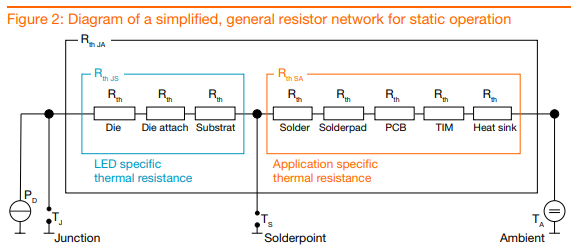
Pulsed LED application like flash LEDs requires adequate thermal management to counter the heavy heat caused by larger current, here’s an app note from OSRAM discussing on thermal management of LEDs. Link here (PDF)

This application note focuses on how to develop an adequate thermal management for LEDs in camera flash applications. It provides information on critical factors and the thermal properties of LEDs during a range of operation modes as well as information on how to develop an adequate thermal management in flashlight applications.

App note: Dimming InGaN LEDs

an_osram_AN042

App note from OSRAM on InGaN LEDs dimming method without penalty on its wavelength. Link here (PDF)

While the InGaN technology produces the brightest light output across Blue, Deep blue, Verde, True green and White, it is important to understand that the wavelength of the light emitted depends on the forward current. In order to avoid shifts in the color, the dimming strategy must be considered carefully.

ATtiny13 – 8bit mono class D amplifier

attiny13_class_d_amplifier_featured-600

Łukasz Podkalicki shared a how-to on building a Class D amplifier on ATtiny13:

I always wonder whether it is possible to make an amplifier of class D on ATtiny13 or not. Some time ago I found George Gardner’s project based on ATtiny85 – TinyD. It was a sign to start challenging it with ATtiny13. It took me a few hours but finally I made it! The code is very short and useses a lot of hardware settings which has been explained line-by-line in the comments. The project runs on ATtiny13 with maximum internal clock source (9.6MHz). It gave me posibility to use maximum of hardware PWM frequency (Fast PWM mode).

See the full post on his blog.

Check out the video after the break. Continue reading “ATtiny13 – 8bit mono class D amplifier”

Building the ultimate USB power distribution system

usbpower-final-board-600

Dr. Scott M. Baker published a new build:

My goals include:
1. The ability to switch each device on/off with a rocker or toggle switch
2. Current limiting capability via a fuse or similar device
3. Overvoltage protection
4. Visual indicator (LED) of operational status
5. Multiple independent outlet

See the full post on his blog.

Check out the video after the break. Continue reading “Building the ultimate USB power distribution system”

#FreePCB via Twitter to 2 random RTs

BP

Every Tuesday we give away two coupons for the free PCB drawer via Twitter. This post was announced on Twitter, and in 24 hours we’ll send coupon codes to two random retweeters. Don’t forget there’s free PCBs three times a every week:

  • Hate Twitter and Facebook? Free PCB Sunday is the classic PCB giveaway. Catch it every Sunday, right here on the blog
  • Tweet-a-PCB Tuesday. Follow us and get boards in 144 characters or less
  • Facebook PCB Friday. Free PCBs will be your friend for the weekend

Some stuff:

  • Yes, we’ll mail it anywhere in the world!
  • Check out how we mail PCBs worldwide video.
  • We’ll contact you via Twitter with a coupon code for the PCB drawer.
  • Limit one PCB per address per month please.
  • Like everything else on this site, PCBs are offered without warranty.

We try to stagger free PCB posts so every time zone has a chance to participate, but the best way to see it first is to subscribe to the RSS feed, follow us on Twitter, or like us on Facebook.