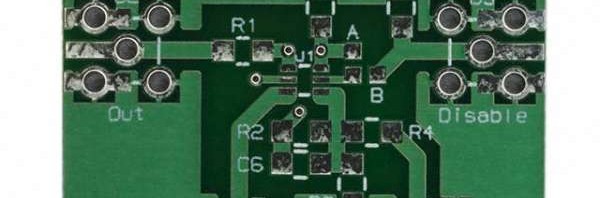
TI F2806x Piccolo controlSTICK dev-board

TI has a new cheapie $29 development board for the F2806x Piccolo microcontroller:

  • High-Efficiency 32-Bit CPU (TMS320C28x™)
    • 80 MHz (12.5-ns Cycle Time)
  • Floating-Point Unit
    • Native Single-Precision Floating-Point Operations
  • Programmable Control Law Accelerator (CLA)
    • 32-Bit Floating-Point Math Accelerator
    • Executes Code Independently of the Main CPU
  • Embedded Memory
    • Up to 256KB Flash
    • Up to 100KB RAM
    • 2KB OTP ROM

Thanks octal! Via the forum.

Review: VPN1513 GPS receiver module

The VPN1513 GPS Receiver Module is a newly released combination GPS receiver and Parallax Propeller mini dev board. It uses a SiRF Star III chipset capable of tracking up to 20 satellites. The module supports both “raw” output mode for raw NMEA 0183 strings and the default “smart” mode for specific user-selected data through a serial interface. The VPN1513 GPS Receiver Module also features a Propeller co-processor for easy interface with any BASIC Stamp 2 module. The Propeller is also fully reprogrammable and includes access to all 32 IO pins, allowing the GPS Receiver Module to be easily transformed into a standalone device. An external antenna with MCX connector and 9 foot cable is included. The module interfaces with external devices via a single SIO pin.
Continue reading “Review: VPN1513 GPS receiver module”

Component organizer program

msr writes:

I would like to share with you a small program that helps to organize datasheets and application notes (plus source code).
It’s not open source because the code is not something I’m proud of (it was my first experience with C# and so it’s a completely mess :).
However, I hope it could be useful to people at least as it has being for me.

Via the contact form.

Free PCB Sunday: Pick your PCB

We go through a lot of prototype PCBs, and end up with lots of extras that we’ll never use. Every Sunday we give away a few PCBs from one of our past or future projects, or a related prototype. Our PCBs are made through Seeed Studio’s Fusion board service.

This week two random commenters will get a coupon code for the free PCB drawer tomorrow morning. Pick your own PCB.

You get unlimited free PCBs now – finish one and we’ll send you another!

Don’t forget there’s free PCBs three times every week:

  • Tweet-a-PCB Tuesday. Follow us and get boards in 144 characters or less
  • Facebook PCB Friday. Free PCBs while you wait for the weekend
  • Free PCB Sunday, right here on the blog

Continue reading “Free PCB Sunday: Pick your PCB”

Arduino & iPhone = GSR lie detector


Anna Dumitriu, Tom Keene and Alex May recently gave a presentation at 17th International Symposium on Electronic Art in Istanbul demonstrating how to build an Arduino to iPhone/Android interface with GSR sensor.

A GSR sensor connects to an Arduino board. The Arduino generates an audio tone mapped to value of electrical resistance in the skin. A filter removes a 32KHz sampling frequency contained within the output signal, which is received by an iPhone/Android mobile phone via their microphone input.

When a 9v battery is attached, the device takes 1 second to startup, then plays a 3 second startup sequence (composed by Caryl Mann). Two sensors placed on the skin will then measure subtle changes in skin resistance. The sweat glands are controlled by the sympathetic nervous system, so skin conductance can be used as an indication of psychological or physiological arousal.

The build instructions and Arduino code are available for download from theanthillsocial website. We’ve inquired as to the iPhone app used to display the waveform, and will post the reply.

This is a cool example of how to use open source technology to enhance the functionality of commercial closed source hardware at little to no cost.

Via Medicarduino.

Multiband digital television tuner

rsdio writes:  I’d rather find a DTV modulator chip than a tuner, but maybe some day…

MAX3544
Multiband Digital Television Tuner

Achieves Highest Performance with Spur-Free, Easy Design-In Architecture Addressing Worldwide Digital Standards

  • Offers robust picture and increased receiving range to require much less engineering effort to implement
  • Provides one single pin out and board layout for all worldwide standards and TV designs
  • Saves space and cost with easy-to-design tuner layout

Free PCB coupon via Facebook to 2 random commenters


Every Friday we give away some extra PCBs via Facebook. This post was announced on Facebook, and on Monday we’ll send coupon codes to two random commenters. More PCBs via Twitter on Tuesday and the blog every Sunday.

Don’t forget there’s free PCBs three times a every week:

  • Free PCB Sunday. The classic. Every week, get free PCBs right here on the blog comments
  • Tweet-a-PCB Tuesday. Follow us and get boards in 144 characters or less
  • Facebook PCB Friday. Free PCBs while you wait for the weekend

Continue reading “Free PCB coupon via Facebook to 2 random commenters”

Week in (p)review: September 30, 2011

Facebook free PCB Friday is on the way. Don’t forget to share your current project in the comments or the forum.

Here’s a summary of major developments over the last week:

Coming this week:

  • App notes on the weekend
  • Free PCB Sunday
  • Free PCBs via Twitter on Tuesday
  • Partlist Wednesday
  • Free PCBs via Facebook on Friday
  • Weekly roundup and preview every Friday

What are you hacking this week?

TMP103 and TMP006 evaluation kit winners

Today we announce the winners of the TMP103 and TMP006 evaluation kits.  There were lots of great suggestions, thanks for your submissions.

Congratulations to Benny Boy, his idea for the TMP006:

Beekeepers can use infrared thermometers to locate (roughly, see www.beesource.com/forums) where a colony in a wall has built. Would be nice to hook the TMP006 up to two steppers on a tripod, then scan the wall to create an image. Made to mount on a camera tripod, you could trade out for a camera after, then overlay the temperature map.

and Chad‘s idea for the TMP103 :

I have a small greenhouse. One of the concerns I always have is that the soil temperature of my seedlings is in a good range and that the air temp in the greenhouse doesn’t get too high or too low. I’d use the TMP103 to measure general air temperature of the greenhouse. Then, the really cool part would be to mount the TMP006 to a servo, allowing a microcontroller to rotate the board to point it at different trays of plants and measure the soil temperature. That way I could alert if any were too low or high, as well as build a profile of hotspots in my greenhouse throughout the season.

Flash Destroyer free PCB build

znanev built a free Flash Destroyer PCB.

After 13 days elapsed, the counter was still ticking and the EEPROM survived over 7 million writes. I wanted to capture the precious moment of the display showing all 7s, but again I had no luck…After 19 days since the start, I found the poor EEPROM had died…

After the EEPROM had died, I played a bit with the sources and made the display capable of showing all alhpa-numeric characters (some were not that readable, but it is hard to represent some letters with only 7 segments :)

Now I’m working on re-purposing the Flash Destroyer into a digital thermometer. I will post my success (if any) here soon.

If you build a free PCB we’ll send you another one! Blog about it, post a picture on Flicker, whatever – we’ll send you a coupon code for the free PCB drawer.