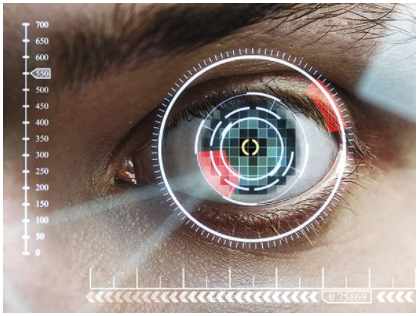
App note: Ophthalmic surgery

Great read app note from Newport about non contact treatment for eye diseases using lasers. Link here

Ophthalmology is the branch of medicine that deals with the anatomy, physiology and diseases of the eye. The laser is particularly suited to ophthalmic surgery since it can provide a non-contact method of interacting with the cornea or even the interior of the eye, including the lens and the retina. Laser photocoagulation surgery is used to treat several eye diseases and has become widely used in recent decades. Treatments for diabetic retinopathy and macular degeneration have also been accomplished with several kinds of lasers including ion lasers, dye lasers, and laser diodes. Recently, two forms of ophthalmic surgery have attracted great attention: laser-assisted in situ keratomileusis (LASIK), which is used to modify the cornea and correct vision, and cataract surgery, which can facilitate replacement of the lens when it becomes cloudy. Both procedures are accomplished with the help of ultrafast pulsed laser systems.

App note: Serial Flash Discoverable Parameter (SFDP) Introduction

App note from Macronix on how SFDP help easily use serial flash. Link here (PDF)

Serial Flash Discoverable Parameter (SFDP) standard provides a consistent method of describing the functional and feature capabilities of Serial Flash devices in a standard set of internal parameter tables. These parameter tables can be interrogated by host system software to enable adjustments needed to accommodate divergent features from multiple vendors.
SFDP provides more flexibility in vendor selection; reduces engineering resources for firmware upgrades and effectively shortens the time to bring product to the market. The value of SFDP mirrors that of Common Flash Interface (CFI) for Parallel Flash. The software engineers have been asking for a standard like this since the increased adoption of Serial Flash.

App note: Plastic package device thermal resistance

App note from Macronix on managing thermals of memory plastic packages devices. Link here (PDF)

Thermal system design needs to account for heat transfer at many levels: device, board, and system level. In this document we focus on device level thermal resistance, the relationship between TJ (Junction Temperature) and TC (Case Temperature), and how heat is dispersed through the air and board.

App note: Pulse capabilities for thick film power resistors

Another app note from Vishay on their thick film power resistors on pulsed application. Link here (PDF)

Vishay Sfernice offers a wide range of thick film power resistors. Our resistors are able to dissipate from 5 W up to 1100 W with a large range of ohmic values (10 mOhm up to 1 MOhm).
The pulse capability of our resistors is a key specification formany customer applications.
The energy curve in the datasheets shows the maximum energy that can be applied over a given period.
In this application note, we use the example of our LPS 800 resistor to explain a method to evaluate whether the resistor is appropriate for a given application. This method can be used for each resistor type using the corresponding pulse curve or limiting voltage from the corresponding datasheet.

App note: How to Use an SiC Diode in a PFC Circuit

App note from Vishay on using the SiC’s diode no switching loss on PFC circuit. Link here (PDF)

An SiC diode is the optimal choice for power factor correction (PFC) in continuous conduction mode (CCM) because its particular reverse recovery characteristics reduce switching losses to almost zero.
The selection criteria for an SiC diode are different from the selection criteria for of an Si diode in the same circuit. Usually at high frequencies in CCM, Si diodes show switching losses that are not negligible. The current capability of each diode is defined as the DC current that in a certain thermal condition brings the TJ to its limit; normally 175 °C for an SiC diode and 150 °C to 175 °C for an Si diode.
The diode’s current capability is related to the maximum power that the diode is able to manage, evaluated only with DC current. However, a PFC diode is switching, so the device should be able to manage all dissipated power, not only conduction losses.

Ultra low power LED flasher using the Padauk PFS154

Low power LED flasher on PFS154:

Flashing a LED is certainly among the first set of problems any burgeoning electronics specialist is tackling, may it be by using an ancient NE555 or, more recently, a microcontroller to control the LED. As it turns out, we can turn any trivial problem into a harder one by changing its constraints.

More details on Tim’s blog.

esp32s2Stick

Luca Dentella designed and built a USB stick powered by esp32-s2 chip, the esp32s2Stick:

esp32s2Stick is a USB device based on the esp32-s2 chip by Espressif. Thanks to the presence of an USB OTG interface, it is possible to program the chip to act as a USB peripheral (mass storage device, CDC…) and to upgrade the firmware through USB (DFU, Device Firmware Upgrade).
In addition to the basic circuit needed to run the WROVER module, esp32s2Stick offers an RGB LED and a socket for MicroSD cards.

See the full post at lucadentella.it. Project files are available on GitHub.

App note: Virtually increasing the number of serial communication peripherals in STM32 applications

App note from STMicroelectronics on possible alternate switching of channels to cater multiple communication routes. Link here (PDF)

Application engineers often face the problem of limited number of serial communication peripherals of a microcontroller that, on the other hand fulfills all the other application requirements thanks to its features and performance. Sometimes they obviate by switching to a higher level microcontroller with sufficient number of communication peripherals. This migration brings with it additional (often unused) performance and functionality, in most cases unneeded and not used by application, in addition to increased costs and PCB complexity.
A frequent case is when full (or specific) functionality is not required for each and every channel, in this case the communication flow and its control can be simplified radically (e.g. communication is required at specific modes or time slots only, communication speed can be lower, correct timing is not strictly required for all the signals, simplified protocol or flow is acceptable). In these specific cases the user would really benefit from methods on how to supplement the missing channel(s) with current HW, to avoid needless migrations.

App note: Power transistor safe operating area – special considerations for switching power supplies

App note from ON Semiconductors about less common transistors stresses when used on switching power supplies. Link here (PDF)

The power transistor, in today’s switching power supply, exists in an environment which is quite hostile to semiconductors. Large currents, large voltages, high temperature, high frequency, and low impedance sources add up to something close to the worst of all possible worlds for the transistor.
Given this type of environment, it is not surprising to find that keeping transistor stresses within acceptable limits can be quite a challenge. Transistors designed and specified specifically for switching power supplies help, but do not in themselves guarantee a reliable design. Very often, reliability is determined by the more subtle aspects of how stress imposed by the power supply relates to transistor safe operating area.

App note: Bring a “CAN-DO” attitude to your industrial drone design

Tech note from Maxim Integrated on using the proven robustness of CAN Bus to drone’s internal parts communication. Link here (PDF)

Providing predictable and error-free communications, CAN bus networks have been the workhorse of the automobile industry for over thirty years. However, they have recently found a new lease on life in other industrial applications, including drones. In this design solution, we show where and how CAN transceivers can be used in drone designs and explain why it is important that they come with the high levels of electrical protection when used in this application.

App note: Automotive infotainment gesture control for the rest of us

Gesture recognition discussed in this tech note from Maxim Integrated. Link here (PDF)

Infotainment gesture control enhances driver experience and safety by helping avoid distractions caused by fiddling with touchscreens and poorly located dials. Gesture recognition can complement touchscreens, voice, and knobs so that the driver can focus on the road. Time-of flight cameras, although fancy, are computationally heavy and expensive. A new, disruptive approach integrates the use of optics, sensing, and an analog front-end in a single ASIC, dramatically reducing cost and advancing the adoption of this important technology in a wider tier of automobiles.

App note: High current LED capacitive drop drive

Fairly old app note from ON Semiconductors on using capacitors to drive LEDs off AC mains. Link here (PDF)

This application note describes the basics for powering high current light emitting diodes (LEDs) utilizing a capacitive divider circuit off the AC mains. A linear regulator is used to control the LED current in order to ensure optimal performance and long life. LED characteristics are explained, followed by an example design to illustrate the concept.

App note: A guide to choosing the right ultra low Iq low dropout linear voltage regulators

App note from ON Semiconductors that discuss tradeoffs between achivieng low quiescent current and good dynamic performance when choosing an LDO. Link here (PDF)

One of the most important challenges today in designing electronic applications is to minimize the power consumption of the system. To accomplish this, most systems utilize various low power modes which help to minimize the overall power consumption. When utilizing various modes of operation, system supply currents can easily vary from single A or even fractions of A in sleep to tenths or hundreds of mA in full power mode. Low Dropout Linear Voltage Regulators (popularly referred to as LDOs) are common building blocks in any power system and the choice of linear regulator can have an important impact on the overall system power consumption. To complicate this choice, it is often required that the LDO not only feature ultra−low quiescent current but should additionally provide good dynamic performance to assure stable, noise−free voltage rail, suitable for sensitive circuits.

App note: Snubber design for noise reduction in switching circuits

Minimize noise by properly designing a snubber circuit in switching converters, app note from Alpha & Omega Semiconductor. Link here (PDF)

In high frequency switching converters the designers face a common challenge of dealing with switching noise. In particular when the high side Mosfet turns on, the body diode of the low side FET, which was in conduction before, turns off. During the turn off process the body diode draws a peak reverse recovery current and then abruptly snaps off. Since there is a small but finite parasitic inductance in the circuit, the reverse recovery current will circulate through the circuit until it dies down. This will result in voltage overshoot and ringing at the phase node which is quite undesirable. If the overshoot is severe enough, the low side FET may turn on again or go into avalanche breakdown. On the other hand the ringing may cause negative spikes with respect to ground, and these spikes may get coupled to the sensitive electronic components in the load causing malfunctions.

App note: Power MOSFET continuous drain current rating and bonding wire limitation

App note from Alpha & Omega Semiconductor about current limitations on MOSFETs with exposed pads. Link here (PDF)

Power MOSFET datasheets will usually show maximum values for continuous drain current Id, on the first page of datasheets.
For bottom exposed part such as DPAK, TO220, D2PAK, there is always a note besides Id rating saying that Id is limited by bonding wires. Is this true? The answer is no for most of the cases.
The reason would be shown in this article and more studies will be present to show, how low the silicon resistance should be to lead to a bonding wire limitation issue.

App note: Wireless gamepad solution based on LPC5528 and NxH3670

Application note from NXP Semiconductors introduces a wireless gamepad solution based on LPC5528 and NxH3670. Link here (PDF)

LPC5528 is a Cortex®-M33 based microcontroller for embedded applications. It has two USB device controllers which are key peripherals for the gamepad solution: Full-speed USB and High-speed USB device controllers. All of these features make LPC5528 very suitable as a gamepad or headset host controller. NxH3670 is a ultra-low-power 2.4 G wireless transceiver. It integrates a Cortex-M0 processor and has passed the Bluetooth Low Energy 4.2 certification. It has low latency and low power consumption characteristics and is used in wireless gaming headset products.

The main functions implemented are as follows:
• Wireless mode
USB cables are not required to connect PC (game console) and gamepad.
• Wired mode
When the battery of gamepad is exhausted or there is no USB dongle module, the gamepad can be connected to the PC (game console) through a USB cable to make the gamepad work in wired mode and charge the battery.
• Audio playback and recording function
When the gamepad is working in wireless mode, the audio data on the PC is transmitted to dongle board through the USB interface, and then the audio is transmitted to the gamepad through the NxH3670 for playback. The gamepad can also transmit microphone data to the PC.
• USB VCOM and OTA upgrade function
During the OTA upgrade process, the PC sends the new firmware to the dongle board via USB VCOM. Then, the dongle forwards the firmware to the gamepad. This new firmware will be written to the specified flash address.

App note: Wi-Fi Alliance derivative certification process

App note from NXP giving you an overview of Wi-Fi Alliance certification program and step-by-step procedure of the Wi-Fi derivative certification process. Link here (PDF)

Wi-Fi CERTIFIED™ is an internationally recognized logo of approval for products indicating that they meet the industry agreed standard for interoperability, security, quality and a range of application specific protocols. It ensures the product delivers best user experience.
The Wi-Fi certification program assures tested and proven interoperability among Wi-Fi devices. This certification gives confidence that Wi-Fi product bearing Wi-Fi Certified logo have passed rigorous interoperability requirements.
Authorized Test Labs(ATL) certification is important and most of the time it is the last milestone before the product launch.

Squeezing FPGA memory

Squeezing FPGA memory @ Big Mess o’Wires:

I’m developing an Apple II disk controller that’s based on the UDC disk controller design. The original UDC card had 8K of ROM and 2K of RAM, so it needs 10K of combined memory. The FPGA device I’m using for prototyping, a Lattice MachXO2-1200, has 8K of embedded block RAM and 1.25K of distributed RAM. It also has 8K of “user flash memory”. So will the UDC design fit? It’s close, but I think the answer is no.

App note: Proper resistance measurement test method for Bourns metal current sense

How to Measure low resistance accurately talked through in this white paper from Bourns. Link here (PDF)

Resistance value measurement tests typically use standard multimeters with two measuring wires. This measurement method is suitable for resistance values higher than 10 ohms, but is more prone to inaccurate results when measuring lower resistance values. This is especially true of current sense resistors with resistance values under 100 milliohms. Measuring resistance values less than 1 ohm requires the tester to apply a four-wire (Kelvin) measurement method.

App note: Advantages of sulfur-resistant film resistors

Special type of SMD resistors from Bourns that are resistant to most environmental pollution. Link here (PDF)

In recent years, the long term reliability of film chip resistors in a high sulfur environment plays an increasingly important role in a wide range of market segments such as industrial electronics, IT systems and telecommunications. Sulfurous environments have a negative impact on film resistors by reacting with elements, in particular silver. Sulfide growth can cause resistors to go open circuit.
The critical environmental factors of sulfur pollution are:
• Where oils, lubricants or fossil fuels are used
• Rubber seals, gaskets, grommets or molded coatings of affected material
• Air polluted industrial area or areas containing biological or volcanic gasses