Free PCB Sunday: Pick your PCB

BP-600x373

We go through a lot of prototype PCBs, and end up with lots of extras that we’ll never use. Every Sunday we give away a few PCBs from one of our past or future projects, or a related prototype. Our PCBs are made through Seeed Studio’s Fusion board service. This week two random commenters will get a coupon code for the free PCB drawer tomorrow morning. Pick your own PCB. You get unlimited free PCBs now – finish one and we’ll send you another! Don’t forget there’s free PCBs three times every week:

Continue reading “Free PCB Sunday: Pick your PCB”

App note: Ceramic multilayer capacitors in HF SMPS applications

an_avx_mlchf

Development and improvement of ceramic multilayer capacitors in high frequency power supply filtering, a technical note from AVX. Link here (PDF)

There has been an explosion of interest in the use of ceramic capacitors for high frequency power conversion applications. This interest is compounded with new designs striving for higher frequencies, smaller sizes and greater efficiencies. This application is an ongoing and mutual development of ceramic values, processes and sizes that were never realized prior to this application. In more and more cases, the ceramic capacitor is dictated by performance requirements never attainable in the previous styles of electrolytic and tantalum.

App note: Output filter caps for mission critical applications

an_avx_output_filters

A great guide from AVX on output capacitor types and their specific uses based on ESR, ESL and temperature properties. Link here (PDF)

This document discusses the effect of capacitors on output power quality. It evaluates and provides a comparison of different capacitor technologies, their high reliability qualification availability from COTS+ to space level, and their impact on the output filtering capabilities in switching power supplies primarily used for mission critical applications.

Free PCB coupon via Facebook to 2 random commenters

BP

Every Friday we give away some extra PCBs via Facebook. This post was announced on Facebook, and on Monday we’ll send coupon codes to two random commenters. The coupon code usually go to Facebook ‘Other’ Messages Folder . More PCBs via Twitter on Tuesday and the blog every Sunday. Don’t forget there’s free PCBs three times every week:

Continue reading “Free PCB coupon via Facebook to 2 random commenters”

Tutorial, experiments and teardown of a 77GHz automotive FMCW radar module

Radar-300x167

Tutorial, experiments and teardown of a 77GHz automotive FMCW radar module from The Signal Path:

In this episode Shahriar explores the principle operation of automotive FMCW radars. Thanks to a donated automotive radar module, various components of the system can be examined and explored. The PCB reveals three die-on-PCB ASICs responsible for generating and receiving 77GHz FMCW signals coupled to a 2D array of antennas. Several microwave components such as rat-race couplers and branchline couplers can also be observed. PCB rulers from SV1AFN Design Lab also show these microwave components at much lower frequencies. Two other ICs are used for ramp generation and PLL as well as a multi-input LNA/PGA/AAF with 12-bit ADC for IF processing. All components are examined under the microscope and the frequency of operation is calculated by measuring the branchline coupler’s dimensions.
Finally a simple Doppler effect radar is constructed by using a doubler, power divider, mixer and a pair of Vivaldi horn antennas. The Doppler effect can be observed by moving an object in front of the antenna pair.

More details at thesignalpath.com.

Check out the video after the break. Continue reading “Tutorial, experiments and teardown of a 77GHz automotive FMCW radar module”

Electronic film clapper

IMG_4560_50

Steve Smith from ProjectAVR has published a new build:

On the board, I included several options to tailor the design to the builders taste. Provision for both a digispark board or bare ATTiny85 chip, small or large tact switches and a jumper to defeat the LEDs supply resistor for extra brightness.
I chose to build the Digispark version first. It went together easily (bar a hole size issue, more of that later) and I programmed the digispark via it’s own USB socket. And… the board completely failed to start up. It took me some time to realise that I’d got the USB power connections inverted! Lucky I’d added a reverse polarity diode! I de-soldered the USB ‘A’ type plug and re-soldered it on the back side of the board flipping the connections. I don’t have the correct type of USB plugs anyway, so it’s a bit of a kludge at the moment. However, once this was done, the board sprung to life. When powered up, the Digispark’s micronucleus bootloader kicks in for a few seconds and then the Clapper code starts.

Project info at projectavr.com

Piezoelectric buzzer teardown

pics-TOP_VIEW1 - Copy

A teardown of piezoelectric buzzer from  Electronupdate:

An assembly commonly used on fire, burglar and similar alarm systems.
Based around a piezoelectric disk coupled to a plastic cylinder with a hole on the end (used to amplify the sound).
The controller appears to use a rom-based look up table to generate the sounds
The pattern right below the array almost looks like a series of digital wave forms. I think this is strong evidence of an address decoder.. I presume there is a decoder below each of the columns which actives if the pattern matchs.

More details at Electronupdate blog.

Check out the video after the break. Continue reading “Piezoelectric buzzer teardown”

Panelization – using GerberPanelizer on Windows (Linux possible)

8178811494287647595

Arsenijs over at Hackaday.io writes:

This tutorial was done on Windows. Authors claim it could also be used on Linux by using Mono, but I haven’t tried and don’t understand a lot about Mono to see what could be done. I am switching to Linux nowadays, so I’d be very grateful to anybody that’d make instructions on how to launch it, however – and I’m sure other fellow Linux-wielding engineers will be grateful, too =)
This is the GitHub issue describing steps to launch it on Linux, half-successfully (thanks to @jlbrian7 for figuring this out

More details at Hackaday.io project page.

Thanks Scrubis! Via the contact form.

App note: Application of leaded resistors in energy meters

an_vishay_leaded_resistors_on_energy_meters

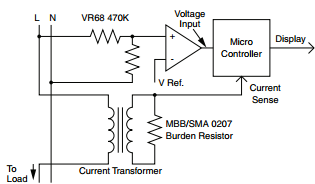
App note from Vishay about energy meter circuits and the use of leaded resistors on them. Link here (PDF)

An electric meter or energy meter is a device that measures the amount of electrical energy supplied to a residence or business. It is also known as (k)Wh meter. The main unit of measurement in the electricity meter is the kilowatt-hour which is equal to the amount of energy used by a load of one kW over a period of one hour.

App note: Overcurrent protection with Thin Film resistors technology

an_vishay_thin_film_fuse

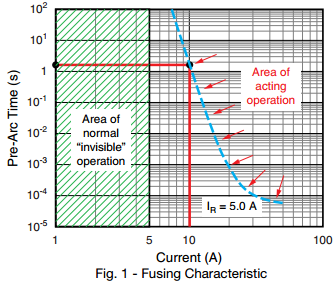
A technical note about Thin Film fuses from Vishay. Link here (PDF)

Thin film technology is an established technology for high-grade passive components, which has been proved and refined over decades. Its advantages in terms of accuracy, repeatability and stability are appreciated in mass production for billions of thin film resistors every year. Chip fuses produced in thin film technology now deliver similarly predictable properties in terms of the stability and repeatability of the fusing characteristic. With this proven technology embodied in next-generation safety devices for overcurrent protection, power electronics designers can achieve higher levels of safety and performance in new product designs.

Free PCB coupon via Facebook to 2 random commenters

BP

Every Friday we give away some extra PCBs via Facebook. This post was announced on Facebook, and on Monday we’ll send coupon codes to two random commenters. The coupon code usually go to Facebook ‘Other’ Messages Folder . More PCBs via Twitter on Tuesday and the blog every Sunday. Don’t forget there’s free PCBs three times every week:

Continue reading “Free PCB coupon via Facebook to 2 random commenters”

DIY NAS

NAS-BOX

A DIY NAS project from Peter Scargill:

So I’ve had a fair experience of these systems. Well, this blog entry isn’t about expensive NAS systems. It’s about a cheap one… really cheap that is – and DIY.
How cheap? Well, about £12 depending on what you have handy. For this price you need a handy 2.5” hard drive, a FriendlyArm NEO or NEO2 and of course the 1-Bay NAS Kit for NanoPi. Beware that the front panels for NEO and NEO2 are SLIGHTLY different – i.e. the Ethernet connection position varies slightly so these are not cross-compatible without a spot of filing which is why I’m showing you the stock photo!
Anyway… so I plugged my trusty 100GB 2.5” hard drive into the board (well, it was free and was sitting doing nothing), plugged the NEO2 into the board, downloaded the ROM and.. well, that was it really – turned on the power (you need a 12v power supply) and waited. Sure enough the unit appears on my network.

More details at Scargill’s Tech blog.

ATM90E36 Dev-kit for 3-phase AC metering

IMG_20170116_115148

Tisham Dhar blogged about his ATM90E36 3-phase energy monitor project:

After successfully building the single-phase energy monitor with the ATM90E26 there has been lots of interest in the 3-phase version. Being an open-hardware project, many people have created remixed and derived versions as well. After a while I started receiving requests to assist with the code for ATM90E36, the 3-phase version of the Energy Monitor chip. However I did not have the hardware to test the code, so I put together this basic devkit to access the SPI bus and easily inject voltage and CT signals to take the ATM90E36 through its paces. This is the first board I have designed based purely on user demand rather than to scratch my own itch, since I don’t have 3-phase supply at home.

Project info at Tisham Dhar’s blog.

Check out the video after the break. Continue reading “ATM90E36 Dev-kit for 3-phase AC metering”

#FreePCB via Twitter to 2 random RTs

IRToy-600x369

Every Tuesday we give away two coupons for the free PCB drawer via Twitter. This post was announced on Twitter, and in 24 hours we’ll send coupon codes to two random retweeters. Don’t forget there’s free PCBs three times a every week:

  • Hate Twitter and Facebook? Free PCB Sunday is the classic PCB giveaway. Catch it every Sunday, right here on the blog
  • Tweet-a-PCB Tuesday. Follow us and get boards in 144 characters or less
  • Facebook PCB Friday. Free PCBs will be your friend for the weekend

Some stuff:

  • Yes, we’ll mail it anywhere in the world!
  • Check out how we mail PCBs worldwide video.
  • We’ll contact you via Twitter with a coupon code for the PCB drawer.
  • Limit one PCB per address per month please.
  • Like everything else on this site, PCBs are offered without warranty.

We try to stagger free PCB posts so every time zone has a chance to participate, but the best way to see it first is to subscribe to the RSS feed, follow us on Twitter, or like us on Facebook.

8-bit assembler compiler project

8-bit assembler compiler

Dilshan Jayakody writes, “8-bit Assembler compiler is NASM compatible assembler compiler to generate binaries for 8-bit x86 like CPUs. The binaries produced with this compiler can execute on Marco Schweighauser’s 8-bit virtual Javascript CPU.
This native compiler can build using Lazarus / FPC. During the implementation we build and test this compiler successfully on Linux and Windows operating systems.”

More details at Dilshan Jayakody’s blog.

App note: Interfacing to analog switches: Driving the control input of an analog switch with 1.8 V or lower − Is it safe?

an_on_AND8304_D

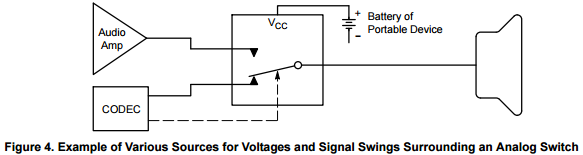
ON Semiconductor’s analog switches let you drive with an input control voltage lower than Vcc. Link here (PDF)

Analog switches are everywhere today. Due to their small size and low current consumption, they are popular in portable devices where they are effective in a variety of subsystems including audio and data communications, port connections, and even test. They can be used to facilitate signal routing, allow multiple data types to share an interface connector, or permit temporary access to internal processors during manufacturing. Analog switches are often used to give portable system designers a convenient method of increasing their features or accessibility without duplicating any circuitry. Understanding the key specifications and tradeoffs can make the difference between a temporary fix and a truly optimized solution.

Free PCB Sunday: Pick your PCB

BP-600x373

We go through a lot of prototype PCBs, and end up with lots of extras that we’ll never use. Every Sunday we give away a few PCBs from one of our past or future projects, or a related prototype. Our PCBs are made through Seeed Studio’s Fusion board service. This week two random commenters will get a coupon code for the free PCB drawer tomorrow morning. Pick your own PCB. You get unlimited free PCBs now – finish one and we’ll send you another! Don’t forget there’s free PCBs three times every week:

Continue reading “Free PCB Sunday: Pick your PCB”

App note: Consideration of self-pollution reduction for electronic systems

an_on_AND9019-D

App note from ON Semiconductors discussing how locally generated EMI affects its own system and how to prevent it. Link here (PDF)

This application note will address the problem of Electro Magnetic Interference (EMI) self pollution in which one part of an electrical systems such as cell phones and consumer electrical products emit radiation that interferes with the operation of other parts of the system.

Free PCB coupon via Facebook to 2 random commenters

BP

Every Friday we give away some extra PCBs via Facebook. This post was announced on Facebook, and on Monday we’ll send coupon codes to two random commenters. The coupon code usually go to Facebook ‘Other’ Messages Folder . More PCBs via Twitter on Tuesday and the blog every Sunday. Don’t forget there’s free PCBs three times every week:

Continue reading “Free PCB coupon via Facebook to 2 random commenters”