30C3 video: Programming FPGAs with PSHDL


In this presentation from the recent Chaos Communications Congress conference in Hamburg, Germany, Karsten Becker highlighted the Plain Simple Hardware Description Language (PSHDL) programming language for FPGAs. PSHDL is a new language that purports to have a much better syntax similar to C, making it easier for developers to learn. If you’ve tried to learn to develop programs for FPGAs, then you know the difficulties involved. There are mega downloads of vendor tools along with the complexities of learning a new language such as VHDL or Verilog. Karsten highlights how PSHDL aims to ease the learning curve significantly and provide more people with the ability to program FPGAs. He also discusses the goal of providing an Arduino-like IDE for FPGA development and programming.

[The presentation begins at 8:00.]

App note: USB current meter using the SPI Interface

ap_USB_current_meter_spi_interface

Here’s a Multi-Protocol Synchronous Serial Engine (MPSSE) implementation from FTDI.

This application note gives an example of using the Multi-Protocol Synchronous Serial Engine (MPSSE) on the FT232H device. It uses D2xx commands to configure the MPSSE to interface with two Analog to Digital Converters (ADCs) using the Serial Peripheral Interface (SPI). It is controlled by software running on the PC written in Visual Basic 2008.

App note: USB hardware design guidelines for FTDI ICs

ap_usb_hardware_design_for_FTDI_chips

Check out hardware design guidelines from FTDI when using their ICs.

While use of FTDI ICs makes USB easy to implement, care must be taken during the hardware design phase of a project to ensure certain practices are followed. This application note
provides design guidelines for several common questions that have been asked of the FTDI Applications Engineering team.
It is not a full and complete list of PCB design rules but only recommendations. It is expected that future releases of this application note will add further recommendations based on feedback from FTDI IC users.

Online Contextual Electronics course


Chris, co-host of The Amp Hour podcast writes about his new project and website called Contextual Electronics.

It’s an 8 week course that teaches people how to take theoretical knowledge and translate it into a real electronics project. The first course (session 1A) teaches how to build an open source arduino shield for lots of functions around the bench. The course also uses KiCad and has an entire auxiliary course associated just with how to use KiCad. John Boxall over at Tronixstuff did a writeup that covers a lot of the important material. The course registration goes until Monday the 20th.

While there is a fee for the course, a free online sample can be found here. For more details visit Contextual Electronics.

Via the contact form.

Continuous temperature monitoring

DSC02361

Hlipka wrote a post on his blog detailing his continuous temperature monitoring build:

Two years ago, when we returned from our skiing vacation, there was a nasty surprise waiting for us: with outside temperatures of down to -20° (celsius), our heating system had shut down. At one point, the pilot flame went out, and without it the heater could switch on again. I don’t know the reason for that (and it hasn’t happened since then), maybe there was a drop in gas pressure. Fortunately the temperatures were not so low for the vacation of last year, but for this year I decided I would like to be able to handle this problem.
Since I cannot really alert the service technican automatically (maybe I could, but he wouldn’t get into the house anyway), I want to know at least that there is some kind of a problem. Some I need some kind of temperature monitoring.

DIY in circuit capacitor ESR meter

OLYMPUS DIGITAL CAMERA

Here’s a DIY in circuit capacitor ESR meter build by Lawrence:

This project was conceived as a way to enhance the collection of test equipment on my test bench. I buy a lot of older HP test gear off ebay as well as older radios. Most of this gear is 25-60 years old and needless to say, the condition of the electrolytic capacitors is somewhat suspect. I needed a way to quickly weed out bad caps with an in circuit tester.
At the present time, there are no plans to market circuit boards, kits, parts or complete units for sale.

Via Hacked Gadgets.

Free PCB coupon via Facebook to 2 random commenters

Dp-qfp-proto-v2

Every Friday we give away some extra PCBs via Facebook. This post was announced on Facebook, and on Monday we’ll send coupon codes to two random commenters. More PCBs via Twitter on Tuesday and the blog every Sunday.

Don’t forget there’s free PCBs three times every week:

Continue reading “Free PCB coupon via Facebook to 2 random commenters”

Week in (p)review January 17, 2014

Excercise4_2_W600

Here’s a summary of major developments over the last week. Free PCB Friday is coming up soon.

Coming up:

  • Free PCBs via Facebook on Friday
  • App notes on the weekend
  • Free PCB Sunday
  • Free PCBs via Twitter on Tuesday
  • Weekly roundup and preview every Friday

Surface-mount 555 PWM circuit

pcb-full

Nick Leijenhorst writes:

I wanted to dim my room LED lighting with a potentiometer, and decided on creating a solution from scratch to make it more fun and educative. I decided to go with the fairly well-known 555 PWM circuit. To decrease size and for learning purposes I decided on using surface-mount components for the first time. The reason I wanted to make this 555 PWM circuit is actually just to see if I could solder SMD components on home-etched PCB’s, and to see how hard it actually is.

Online tool and AT commands for M2M modules

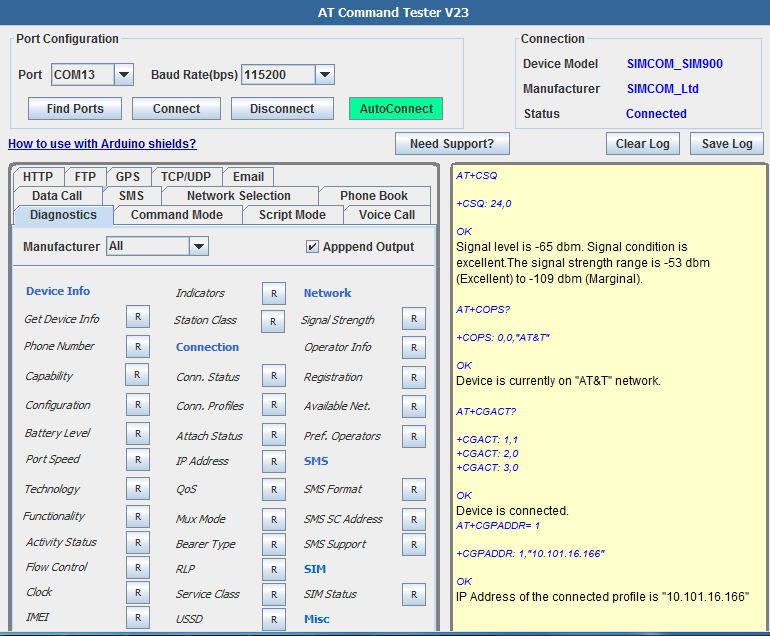
Surya writes with this reference to a guide for a tool an Online AT Command Tester for use with an attached wireless/cellular module. This topic refers to Machine to Machine (M2M) device communications which take AT commands over serial connections. The tool was developed with the M10 Quectel Arduino GSM shield in mind.

Via the contact form.

SMD reflow hot air gun NC automatic machine

smd_reflow_hot_air_gun_nc_84

Giorgos from PCBheaven has been working on a DIY hot-air gun NC machine  and wrote a detailed explanation on his blog describing the build:

Four pieces is all it takes to make the frame of the NC. And BTW, an NC machine is the same as a CNC without the leading C. CNC stands for “Computer Numerical Control” and NC stands for just “Numerical Control”. My device will follow “numbers” to go into specific positions, but there is n o computer or CAD/CAM software whatsoever, so it is an NC machine…

CO2 meter using NDIR infrared MH-Z14 sensor library for AVR ATmega

atmega_mhz14_co2_meter

Davide Gironi writes:

MH-Z14 NDIR Infrared gas module is a common type, small size sensor, using non-dispersive infrared (NDIR) principle to detect the existence of CO2 in the air, with good selectivity, non-oxygen dependant and long life.
MH-Z14 has a PWM output, with a sensitivity range of 0ppm to 2000ppm CO2, an accurancy of ±200ppm.
The cycle is 1004ms±5%, given the duty cicle Th (pulse high), Tl is 1004-Th, we can convert it to CO2 value using the formula: CO2ppm = 2000 * (Th – 2ms) /(Th + Tl – 4ms)
This library read PWM output, and convert it to CO2ppm. This library was developed on Eclipse, built with avr-gcc on Atmega8 @ 8MHz

Check out the video after the break. Continue reading “CO2 meter using NDIR infrared MH-Z14 sensor library for AVR ATmega”

RGB LED ring clock

led_ring_clock_WS2812

Greeeg over at the 430h forum has been working on a RGB LED ring clock:

The clock is comprised of 2 rings of 60 LEDs each. the LEDs are WS2812 parts, which include a built-in driver.
The PCB is one of the interesting parts of this clock. I designed the board in altium as a single 6 LED segment. and then left pads at each end to allow them to be soldered onto another segment.
Currently I am using a MSP-EXP430FR5739 board to drive it, using some very in-efficient assembly code that requires a 20MHz clock.

Via 43oh.

DCC/TAPR video: HackRF – A Low Cost SDR Platform

In this talk from the 2013 Digital Communications Conference (DCC) co-sponsored by the ARRL and TAPR, developer Michael Ossmann discussed the origins and development of the HackRF Jawbreaker SDR transceiver. This is Michael’s first talk at an amateur radio oriented conference.

DIY briefcase Arcade

20131103_170601

Travis Reynolds documented his DIY briefcase arcade build:

This project came about in an odd way.  Where I work, we have an arcade club.  Basically, a group of guys get together and play old school video games.  The only problem is I am the only guy in the club that has an arcade we can use.  So, after getting tired of hosting the arcade club every time we wanted to play, I started thinking about how to make an arcade portable.  I finally arrived at the conclusion to make one into a briefcase.  Also, I watched Iron Man 2 and saw Tony Stark put the Iron Man suit into one, so I figured I could put an arcade into one.

Simple 3.3V power supply unit

3v3psu2_complete_unit

Dilshan Jayakody  writes:

Now a days 3.3V PSU is essential for microcontroller, programmable logic devices and for some analog components also (especially with some new ADCs). This is ultra-simple 3.3V power supply unit, which is suitable for above mentioned experiments. This power supply is based on, ON semiconductor’s MC33269T-3.3 LDO regulator and it is capable to deliver 3.3V output with maximum of 800mA current.
The PCB design supplied with this article is also compatible with LD1117V33 (also known as LD33V) LDO regulator and it can use with this PCB without any changes. Dimension of the given PCB is 70mm × 35mm and it is design with all through-hole components. Our PCB design for this PSU is available to download at elect.wikispaces.com.

Simple 0.96″ 128×64 OLED breakout board

oled_bp

noahp shared his breakout for 0.96″ 128×64 OLED display in the project log forum:

Thought I’d share this design here in case it can be of use to anyone. Includes python script that initializes and loads data to the ssd1306 (please excuse the logo pandering, needed a simple example and that was right in front of me).

Via the forum.

Controller board for RGB LED Matrix displays

3_Board_-__Users_louis_Dropbox_Dev_eagle_projects_

EmbeddedCreations is working on a controller board for the 16×32 and 32×32 RGB LED Matrix displays:

I’m working on a controller board for the 16×32 and 32×32 RGB LED Matrix Displays you may have seen at Adafruit and Sparkfun.
After seeing Paul’s post on driving WS2811 LED strips with DMA on the Teensy 3.0, I looked into driving the Matrix displays with DMA and now have the basics of a driver working. The Arduino really struggles to drive these displays, but the Teensy 3.0 with DMA is able to update them at a high frame rate with CPU left over to do other stuff. I’m working on releasing an open source library for driving the displays, and want to release a open source breakout board as well.