Portable temperature, humidity and light ambient datalogger

pic-Componentes-600

A battery-powered small datalogger based on a PIC18F2620 microcontroller project from Jesus Echavarria:

The idea comes a few months ago, talking with a friend. He needs something to  monitoring temperature and humidity inside a sea container, for a three weeks travel from Spain to China. Low consumption is important, in order to have maximum autonomy with a small battery. I use a HDC1050 temperature and humidity sensor, and a TEMT6000X01 ambient light sensor. The collected data is stored on a micro SD card. Also the board has a RTC for timestamp, a Li-Ion battery charger, user pushbuttons and leds, and a MCP2221 USB bridge to communicate with the board and configure some parameters through software.

Project info at Jesus Echavarria blog.

DIY Desktop CNC with an Arduino

pic-CNC Metal-600

Bob Davis has been working on rebuilding his DIY CNC machine:

I have been busy rebuilding my DIY CNC machine. It will be all metal when I get done. It will also include a USB interface, likely an Arduino. None of my computers have a parallel port these days. So something has to be done to resolve that issue.
This first picture is the new metal parts all drilled and ready for assembly. Well maybe ready to be filed so they can be assembled…..

More details at Bob Davis’ blog.

Check out the videos after the break. Continue reading “DIY Desktop CNC with an Arduino”

ICS501 simple frequency multiplier

phICS501 simple frequency multiplier-600

Scott from SWHarden has published a new build:

Today I made a high frequency multiplier using a single component: the ICS501 PLL clock multiplier IC. This chip provides 2x, 5x, 8x (and more) clock multiplication using an internal phased-lock loop (PLL). At less than a dollar on eBay, $1.55 on mouser, and $0.67 on Digikey, they don’t break the bank and I’m glad I have a few in my junk box! I have a 10MHz frequency standard which I want to use to measure some 1Hz (1pps) pulses with higher precision, so my general idea is to use a frequency multiplier circuit to increase the frequency (to 80 MHz) and use this to run a counter IC to measure the number of clock pulses between the PPS pulses.

More details at SWHarden homepage.

#FreePCB via Twitter to 2 random RTs

BP-600x373

Every Tuesday we give away two coupons for the free PCB drawer via Twitter. This post was announced on Twitter, and in 24 hours we’ll send coupon codes to two random retweeters. Don’t forget there’s free PCBs three times a every week:

  • Hate Twitter and Facebook? Free PCB Sunday is the classic PCB giveaway. Catch it every Sunday, right here on the blog
  • Tweet-a-PCB Tuesday. Follow us and get boards in 144 characters or less
  • Facebook PCB Friday. Free PCBs will be your friend for the weekend

Some stuff:

  • Yes, we’ll mail it anywhere in the world!
  • Check out how we mail PCBs worldwide video.
  • We’ll contact you via Twitter with a coupon code for the PCB drawer.
  • Limit one PCB per address per month please.
  • Like everything else on this site, PCBs are offered without warranty.

We try to stagger free PCB posts so every time zone has a chance to participate, but the best way to see it first is to subscribe to the RSS feed, follow us on Twitter, or like us on Facebook.

Free PCB Sunday: Pick your PCB

IRToy

We go through a lot of prototype PCBs, and end up with lots of extras that we’ll never use. Every Sunday we give away a few PCBs from one of our past or future projects, or a related prototype. Our PCBs are made through Seeed Studio’s Fusion board service. This week two random commenters will get a coupon code for the free PCB drawer tomorrow morning. Pick your own PCB. You get unlimited free PCBs now – finish one and we’ll send you another! Don’t forget there’s free PCBs three times every week:

Continue reading “Free PCB Sunday: Pick your PCB”

App note: Snubber capacitors for complete insurance of power semiconductors

an_wima_igbt

An application note from WIMA about snubber capacitors, Link here.

The trend of modern semiconductor technology towards increasingly powerful applications results in the fact that switched currents and voltage levels are continuously increased and that simultaneously the switching speed is also increasing markedly.
The developments in the area of power semiconductors include the component group IGBT (Insulated Gate Bipolar Transistor) or IGBT modules.
The switching capacity with shortest switching times which can be realized using IGBTs necessitates an extremely low-inductance circuit design. Even the low self-inductance of the power bus may induce dangerous voltage overshoots between collector and emitter which may result in the destruction of the valuable power semiconductors.
To protect the components, so-called snubber suppressor circuits are used. The most important component in this respect is a low-inductance pulse capacitor in order to attenuate or cut off peak voltages.

App note: Selection of capacitors for pulse applications

an_wima_pulseselection

Guidelines from WIMA about selecting capactiors for pulsed conditions. Link here

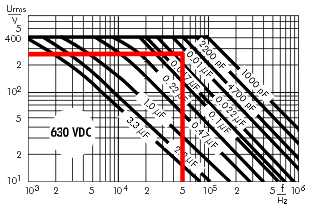
The maximum permissible AC voltage that can be applied to capacitors in sinusoidal waveform applications, can be determined from the graphs in the respective capacitor ranges.
However, where pulse conditions exists, the following procedure is to be observed to ensure that the correct capacitor rating is selected for a particular duty:
– Rated voltage
– Maximum current
– Dissipation
– Determining the permissible AC voltage and AC current at given frequencies

Homebrew dummy load

pic-2015-08-12 20.27.22-600

A simple DIY dummy load project from Flathagen:

I have created a simple 50 Ω dummy load to test transmitters. I also added a simple RF diode detector so I can measure the peak voltage, and calculate the power.
The dummy load consists of eight 100 Ω resistors rated at 2 W so the load should handle 16 W, at least for short periods. I constructed the dummy load using a combination of ugly construction and Manhattan style, by gluing pieces of PCB (as isolation pads) on top of a ground plane PCB. Then I soldered the components directly on the copper without drilling holes.

Project info at DIYcrap.

Free PCB coupon via Facebook to 2 random commenters

BP

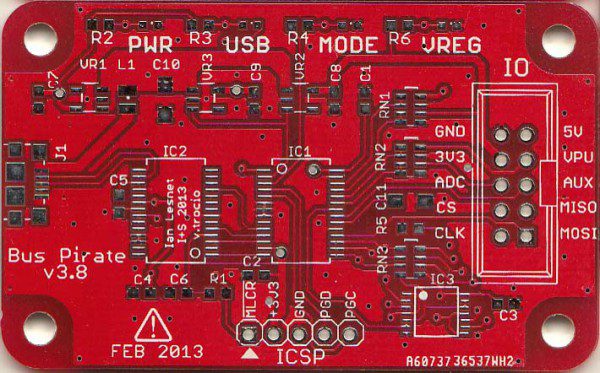
Every Friday we give away some extra PCBs via Facebook. This post was announced on Facebook, and on Monday we’ll send coupon codes to two random commenters. The coupon code usually go to Facebook ‘Other’ Messages Folder . More PCBs via Twitter on Tuesday and the blog every Sunday. Don’t forget there’s free PCBs three times every week:

Continue reading “Free PCB coupon via Facebook to 2 random commenters”

Reverse engineering a simple four function calculator: die decap

pic-4func-600

Electronupdate did a teardown and analysis of a cheap four function calculator:

It’s such an amazingly old looking die
Even with 400x magnification it would not be too hard to reverse engineer back to a schematic! This must be a very old design indeed. When one thinks of high-tech it’s always the new-new thing… however some designs can be very old indeed and still be in production.

More details at Electronupdate’s blog.

Check out the video after the break. Continue reading “Reverse engineering a simple four function calculator: die decap”

R2-D2 build

r2d2-4

Bithead942 blogged about his R2-D2 build:

To really bring R2-D2 to life, I knew I had to do some great sturff with electronics.  I started with a Taranis X9D controller and a pair of X8R receivers configured for a full 16-channels.  I chose this platform mainly for its versatility, but also because I wanted to have separate control of the head and body with one remote controller (so the head can spin a full 360 degrees without tangling the wires).

Project info at Bithead’s blog.

Check out the video after the break. Continue reading “R2-D2 build”

Mini CNC 2D plotter made from an old DVD drive and L293D motor shield

pic-FQXH6JMIRXT8FUH-600

Sandeep_UNO posted detailed instructions of how to make this mini CNC 2D plotter using scrap DVD drive, L293D motor shield and Arduino.

Project instructables here.

Check out the video after the break. Continue reading “Mini CNC 2D plotter made from an old DVD drive and L293D motor shield”

DIY USB power bank from laptop battery

DSC01532

DIY USB power bank made from an old laptop battery from DoItYourselfGadgets:

A situation many can relate to: an empty smartphone battery and no outlet around! That’s exactly why I recycled an old laptop battery into an USB power bank.
This article will show you the basic powerbank circuit consisting of Lithium cell charging circuit, boost converter and toggle switch as well as my improved version with self activating boost converter and LED status indicator and homemade housing.

More details at DoItYourselfGadgets project page.

Check out the video after the break. Continue reading “DIY USB power bank from laptop battery”

#FreePCB via Twitter to 2 random RTs

BP-600x373

Every Tuesday we give away two coupons for the free PCB drawer via Twitter. This post was announced on Twitter, and in 24 hours we’ll send coupon codes to two random retweeters. Don’t forget there’s free PCBs three times a every week:

  • Hate Twitter and Facebook? Free PCB Sunday is the classic PCB giveaway. Catch it every Sunday, right here on the blog
  • Tweet-a-PCB Tuesday. Follow us and get boards in 144 characters or less
  • Facebook PCB Friday. Free PCBs will be your friend for the weekend

Some stuff:

  • Yes, we’ll mail it anywhere in the world!
  • Check out how we mail PCBs worldwide video.
  • We’ll contact you via Twitter with a coupon code for the PCB drawer.
  • Limit one PCB per address per month please.
  • Like everything else on this site, PCBs are offered without warranty.

We try to stagger free PCB posts so every time zone has a chance to participate, but the best way to see it first is to subscribe to the RSS feed, follow us on Twitter, or like us on Facebook.

Breadboard line driver module

pic-IMG_7904-600

Scott from SWHarden has published a new build:

Line driver chips are one of my go-tos for quickly amplifying digital signals because they’re so fast to drop in a breadboard and they provide a strong output with very high impedance inputs and need no external components. Individual buffer of the integrated chip can be paralleled to multiply their current handling capabilities too. One of the common variants is the 74HC240.

More details at SWHarden homepage.

Free PCB Sunday: Pick your PCB

BP-600x373

We go through a lot of prototype PCBs, and end up with lots of extras that we’ll never use. Every Sunday we give away a few PCBs from one of our past or future projects, or a related prototype. Our PCBs are made through Seeed Studio’s Fusion board service. This week two random commenters will get a coupon code for the free PCB drawer tomorrow morning. Pick your own PCB. You get unlimited free PCBs now – finish one and we’ll send you another! Don’t forget there’s free PCBs three times every week:

Continue reading “Free PCB Sunday: Pick your PCB”

App note: Measuring a loudspeaker impedance profile using the AD5933

an_AD_an843

An application note from Analog Devices about AD5933, this provides a low cost substitute to expensive test equipment like signal generators, oscilloscope and voltmeters in getting the speaker’s impedance profile. Link here (PDF)

This application note describes a circuit architecture using the AD5933 that allows the system designer to measure the impedance profile of the loudspeaker and integrate this circuitry into the audio signal chain. This offers many benefits. Upon system power-up, for example, the circuitry provides the ability to measure the impedance profile and thus the acoustic properties of the loudspeaker, enabling direct comparison to a factory calibrated profile stored nearby. Any changes in the impedance profile are detected and further diagnostics are carried out, preventing premature damage.

App note: Choosing the appropriate component from data sheet ratings & characteristics.

an_IXYS_IXAN0056

Chossing the right power semiconductor for an application, a technical note from IXYS. Link here

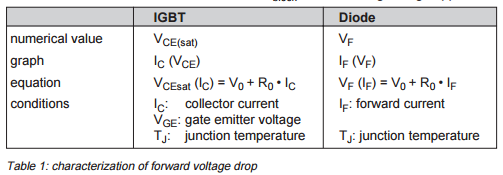
This application note is intended to show how to choose the appropriate rating of a power semiconductor component for a known application using the specifications given in the datasheet. The explanations have been kept sufficiently general to be applicable to all common power circuits. However, for the sake of concreteness, they focus on IXYS IGBT modules and discretes respectively with or without diode. Proceeding as described in the following enables the designer to gain all necessary information from the data sheets for the most economic selection of power semiconductors.

App note: Designing for board level electromagnetic compatibility

appnote

Designing for board level electromagnetic compatibility application note (PDF!) from NXP:

Electromagnetic interference (EMI) is a major problem in modern electronic circuits. To overcome the interference, the designer has to either remove the source of the interference, or protect the circuit being affected. The ultimate goal is to have the circuit board operating as intended — to achieve electromagnetic compatibility (EMC).
Achieving board level EMC may not be enough. Although the circuit may be working at the board level, but it may be radiating noise to other parts of the system, causing problems at the system level.
Furthermore, EMC at the system or equipment level may have to satisfy certain emission standards, so that the equipment does not affect other equipment or appliances.
Many developed countries have strict EMC standards on electrical equipment and appliances; to meet these, the designer will have to think about EMI suppression — starting from the board level.